
The waters surrounding the British Isles have long been home to two vastly different giants: the magnificent marine mammals that have evolved over millions of years to become the largest creatures on Earth, and the impressive human-engineered vessels that connect the island nation to the European continent and beyond. “Crossing Paths: Size Comparison Between British Ferries and the Whales Below” explores this fascinating juxtaposition of natural and human-made behemoths sharing the same maritime spaces.
The seas around Britain are among the busiest shipping lanes in the world, with hundreds of ferry crossings daily, carrying passengers and cargo between the UK, Ireland, France, Belgium, the Netherlands, Denmark, and Norway. These same waters are also critical habitats and migration routes for some of the planet’s most spectacular creatures—whales. From the mammoth blue whale, reaching lengths of up to 30 metres, to the more commonly spotted minke whale at about 10 metres, these extraordinary animals traverse the same channels, bays, and straits as commercial vessels.
This article aims to provide a comprehensive exploration of the relative dimensions of these two types of maritime giants. We will delve into the evolutionary journey of whales, from land-dwelling mammals to the ocean’s largest inhabitants, and trace the development of ferry design from primitive wooden boats to the sophisticated roll-on/roll-off vessels of today. The comparison is not merely academic—understanding the size relationship between whales and ships is crucial for conservation efforts, maritime safety, and sustainable coexistence in increasingly crowded waters.
As climate change alters marine habitats and shipping routes expand northward, interactions between vessels and cetaceans are becoming more frequent. Ship strikes, noise pollution, and habitat disruption pose significant threats to whale populations, many of which are already vulnerable or endangered. By understanding the physical scale of these interactions, we can better appreciate the challenges faced by whales navigating waters dominated by human activity.
Throughout this article, we will examine specific species of whales found in British waters, from the massive fin whale—second only to the blue whale in size—to the charismatic humpback, known for its spectacular breaching displays. Each species will be compared in detail to various classes of ferries operating around the British Isles, from smaller vessels serving the Scottish islands to the massive superferries crossing the North Sea.
We will explore the engineering marvels that allow both whales and ships to move efficiently through water, despite their enormous size. How does a 100,000-tonne ferry achieve speeds of over 25 knots? How does a 200-tonne blue whale dive to depths of 500 metres and hold its breath for over an hour? These questions highlight the remarkable adaptations and innovations that make such feats possible.
Beyond the physical comparisons, we will consider the historical relationship between humans and whales in British waters, from the whaling industry that once decimated populations to today’s whale-watching tours that celebrate these magnificent animals. We will examine how our perception of whales has evolved from resources to be exploited to creatures worthy of our protection and admiration.
The article concludes by looking toward the future of this shared maritime environment. How can ferry design evolve to minimize impacts on marine life? What technologies are being developed to detect and avoid whales in shipping lanes? What policy changes might better protect these vulnerable giants while maintaining vital transport links?
“Crossing Paths” is written for anyone fascinated by the wonders of the natural world and human engineering achievements. Whether you’re a marine biology enthusiast, a shipping industry professional, a conservationist, or simply someone who has stood on the deck of a ferry wondering about the mysterious creatures swimming below, this book offers a unique perspective on the giants—both biological and mechanical—that inhabit British waters.
By understanding the true scale of whales compared to the vessels we build, we gain a deeper appreciation for the grandeur of these animals and the responsibility we bear for their protection. As we navigate forward into an uncertain future for our oceans, this knowledge becomes increasingly vital for ensuring that whales and ships can continue to cross paths without catastrophic consequences for these magnificent marine mammals.
Join us on this journey through British waters, where ancient evolutionary marvels meet modern maritime engineering, and discover the fascinating world where whales and ferries share the waves.
Size Comparison: Blue Whale vs. Dover-Calais Ferry
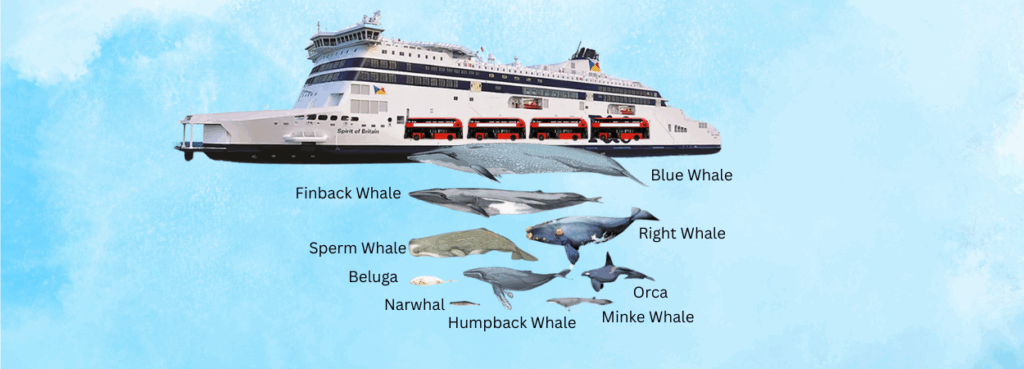
The Giants of British Waters: An Introduction
The seas surrounding the British Isles have always been highways of commerce and migration, not just for humans but for some of the most magnificent creatures on Earth. When one stands on the deck of a cross-channel ferry, gazing at the seemingly endless expanse of water, it’s easy to forget that beneath the waves swim animals of such immense proportions that they rival or even exceed the vessels themselves. This remarkable convergence of natural and human-engineered giants forms the cornerstone of our exploration into the comparative dimensions of British ferries and whales.
The British Isles sit at a unique geographical crossroads where the cold waters of the North Sea meet the warmer currents of the Atlantic, creating diverse marine habitats that support a surprising variety of cetacean species. Eight species of great whales regularly visit British waters, from the relatively common minke whale to the elusive and endangered blue whale—the largest animal ever to have existed on Earth. These marine mammals navigate the same busy shipping lanes that ferry passengers between Britain and continental Europe, creating a fascinating yet sometimes perilous coexistence.
The scale of both these entities—whale and ship—is difficult to comprehend without direct comparison. Consider that a full-grown blue whale can reach lengths of up to 30 metres, roughly the same as a basketball court, and weigh up to 200 tonnes. The P&O Ferries’ “Spirit of Britain,” one of the largest ferries operating in the English Channel, measures 213 metres in length—more than seven times longer than the blue whale—but represents an engineering achievement that, while impressive, has existed for mere decades compared to the millions of years of evolution that produced the whale.
What makes this comparison particularly compelling is not just the physical dimensions but the remarkable efficiency with which both whales and ships move through water. A blue whale, despite its enormous mass, can achieve speeds of 50 kilometres per hour in short bursts, propelled by powerful tail flukes that generate thrust without the use of propellers or engines. Modern ferries, by contrast, rely on sophisticated propulsion systems consuming thousands of litres of fuel to maintain their service speeds of 22 to 25 knots (approximately 40-46 kilometres per hour).
British waters have witnessed a dramatic transformation in both whale populations and maritime traffic over the past century. The waters around the United Kingdom were once hunting grounds for commercial whalers, who decimated local populations of large cetaceans. The advent of international protections, particularly the 1986 moratorium on commercial whaling, has allowed some species to begin a slow recovery. Simultaneously, ferry services have expanded dramatically, with larger vessels carrying more passengers and cargo at higher frequencies than ever before.
The English Channel alone, measuring just 33 kilometres at its narrowest point between Dover and Calais, sees approximately 500 ship movements daily, making it one of the busiest shipping lanes in the world. This concentrated maritime traffic shares space with recovering populations of fin whales, minke whales, and even the occasional blue whale. The North Sea, Irish Sea, and waters west of Scotland and Ireland similarly host both cetaceans and commercial vessels in close proximity.
Understanding the relative scale of whales and ferries is not merely an academic exercise but has practical implications for conservation and maritime safety. Ship strikes—collisions between vessels and whales—are a leading cause of mortality for large whale species worldwide. These incidents often go unnoticed by crews and passengers, particularly when smaller whale species are involved, but can be fatal for the animals and, in rare cases, damaging to vessels.
The waters around Britain present particular challenges for whale conservation due to their enclosed nature. Unlike in open oceans, whales in the North Sea, English Channel, and Irish Sea have limited room to manoeuvre away from shipping lanes. The shallow continental shelf waters preferred by many whale species for feeding are precisely the same areas where ferries operate most frequently.
As we proceed through this book, we will explore each major whale species found in British waters in detail, examining their physical characteristics, behaviour, and distribution patterns. These biological giants will then be compared to various classes of ferries operating from British ports, from smaller vessels serving island communities to massive superferries carrying thousands of passengers across the North Sea.
The comparison extends beyond mere physical dimensions to examine questions of efficiency, environmental impact, and coexistence. How do whales and ships detect and avoid each other? What technologies are being developed to reduce harmful interactions? How might ferry routes and whale migration patterns overlap, and what can be done to minimise negative consequences?
For both the casual ferry passenger and the dedicated whale enthusiast, this exploration offers a new perspective on the marine environment. The next time you stand on the deck of a cross-channel ferry, watching the white cliffs of Dover recede into the distance, you might pause to consider that swimming beneath may be creatures whose evolutionary lineage stretches back millions of years—creatures whose physical scale rivals that of the vessel carrying you across the sea.
This book aims to foster appreciation for both the natural marvels that are whales and the engineering achievements represented by modern ferries. By understanding their relative scale and the spaces they share, we can work toward ensuring that these giants of British waters continue to coexist for generations to come.
The relationship between humans and whales has evolved dramatically over the centuries, from one of exploitation to one increasingly characterised by protection and wonder. Similarly, our approach to maritime transport has shifted from viewing the seas purely as highways to recognising them as ecosystems deserving of care and conservation. The story of whales and ferries in British waters is, at its heart, a story about finding balance between human needs and the preservation of magnificent marine life.
As we embark on this exploration of scale and proportion, we invite you to view British waters through a new lens—one that reveals the true dimensions of the giants that share these seas and the remarkable stories of their parallel existences. From the massive blue whale to the bustling superferries of the English Channel, these are the giants of British waters, crossing paths in a dance of natural and human engineering that continues every day beneath the waves.
The Evolution of Marine Mammals and Passenger Vessels
The waters surrounding the British Isles are home to two distinct types of giants that share little in common save for their impressive dimensions and aquatic habitat. On one hand, we have the majestic whales, products of millions of years of evolutionary adaptation; on the other, the modern passenger ferry, representing the culmination of human maritime innovation. Understanding how these two entities came to share British waters requires a journey through time—one spanning epochs for whales, and centuries for ships.
The Return to the Sea: Whale Evolution
The evolutionary journey of whales represents one of the most remarkable transformations in natural history. Contrary to what one might assume, whales did not evolve from fish or other aquatic creatures. Rather, they are descendants of terrestrial mammals that gradually readapted to life in the ocean approximately 50 million years ago.
The fossil record tells a fascinating story of this transition. The earliest whale ancestors, known as archaeocetes, were four-legged, wolf-sized creatures that spent time both on land and in water. Fossils of Pakicetus, discovered in Pakistan, reveal an animal with the skull structure of early whales but the body of a land mammal, dating to about 50 million years ago. These early proto-whales likely waded in shallow waters, hunting for fish and other aquatic prey.
Over the next several million years, these creatures became increasingly adapted to aquatic life. Ambulocetus, or the “walking whale,” possessed powerful hind limbs for swimming while maintaining the ability to move on land. By 40 million years ago, Basilosaurus and Dorudon had evolved into fully aquatic creatures with vestigial hind limbs that could no longer support terrestrial movement. Their bodies had become streamlined, with nostrils migrating toward the top of the skull to form the blowhole we associate with modern whales.
The evolutionary path split approximately 34 million years ago into the two primary groups we recognise today: the toothed whales (Odontoceti) and baleen whales (Mysticeti). This division represented a specialisation in feeding strategies that would eventually lead to the diverse forms we see in British waters today. Toothed whales, including sperm whales and orcas, evolved sophisticated echolocation abilities for hunting individual prey. Meanwhile, baleen whales developed filter-feeding mechanisms to capture large quantities of small prey, allowing them to attain the enormous sizes exemplified by blue and fin whales.
The capacity for these animals to reach such immense proportions was made possible by several evolutionary advantages of marine life. Water provides buoyancy that counteracts gravitational constraints on size, while the ocean’s abundant plankton and krill offer concentrated energy sources that can sustain massive bodies. The cool temperatures of deep water also facilitate the management of body heat for large animals, which might otherwise overheat on land.
By the time human civilisations began developing seafaring technologies, whales had already been the undisputed giants of the oceans for millions of years. The species swimming in British waters today represent highly specialised marine mammals, perfectly adapted to their aquatic environment through this long evolutionary process.
From Coracle to Car Ferry: The Development of British Passenger Vessels
In stark contrast to the millions of years of whale evolution, human maritime transportation has developed over mere millennia, with the most significant advances occurring within the last two centuries. The earliest evidence of watercraft in Britain dates back to the Bronze Age, with primitive log boats and hide-covered coracles being the first vessels to ply coastal waters and rivers.
Roman Britain saw more sophisticated wooden ships connecting the island to continental Europe, establishing trade routes that would later form the basis for modern ferry services. By the Medieval period, clinker-built vessels like the Viking longship and the later cog dominated maritime transport, gradually increasing in size but still reliant on wind and human power.
The true transformation of passenger vessels began with the Industrial Revolution. In 1821, the Post Office introduced the first steamship mail service between Dover and Calais, marking the beginning of regular, reliable cross-Channel transport that was not wholly dependent on favourable winds. These early steamships were a fraction of the size of modern ferries, typically measuring no more than 50-60 metres in length.
Throughout the 19th century, paddle steamers gave way to screw propellers, and wooden hulls were replaced by iron and eventually steel construction. The advent of steam power allowed for larger vessels and more predictable scheduling, fundamentally changing the nature of maritime travel. By the late Victorian era, dedicated passenger ferries were operating regular services across the English Channel, Irish Sea, and North Sea, though they remained modest in size compared to today’s vessels.
The early 20th century saw the emergence of purpose-built car ferries, responding to the growing popularity of automobile travel. The first drive-on, drive-off service in British waters began operating between Dover and Calais in 1924, though passengers still had to be hoisted aboard by crane—a far cry from the roll-on/roll-off efficiency of modern terminals.
The post-World War II period witnessed a revolution in ferry design with the introduction of true roll-on/roll-off (ro-ro) technology. The Atlantic Steam Navigation Company began the first commercial ro-ro service in 1946 using converted tank landing craft. This innovation allowed vehicles to drive directly aboard through bow or stern doors, dramatically increasing efficiency and capacity.
The 1960s and 1970s marked a period of rapid expansion in ferry services and vessel size. The introduction of hovercraft on the Dover-Calais route in 1968 represented a brief but fascinating chapter in cross-Channel transport, offering speeds of up to 70 knots (approximately 130 km/h) but with limited capacity and weather reliability.
The modern era of British ferry services truly began in the 1980s with the introduction of “superferries”—larger, more stable vessels capable of carrying hundreds of vehicles and thousands of passengers. The completion of the Channel Tunnel in 1994 presented the first serious competition to ferry operators, prompting further innovation and increasing vessel size to improve economies of scale.
Today’s largest ferries operating in British waters, such as the Stena Hollandica serving the Harwich to Hook of Holland route, can measure over 240 metres in length and carry more than 1,200 passengers and 230 cars, plus freight vehicles. These vessels represent the current pinnacle of passenger ship evolution in terms of size, though innovations continue in the realms of fuel efficiency, environmental impact, and passenger comfort.
Convergent Solutions: The Physics of Moving Through Water
Despite their vastly different origins—one the product of natural selection, the other of human engineering—whales and ferries have independently arrived at certain similar solutions to the challenges of moving efficiently through water.
Both employ streamlined forms to reduce drag, though whales achieve this through organic curves perfected over millions of years, while ship designers use mathematical models and fluid dynamics testing. Both generate forward momentum through the movement of specialised structures—the powerful tail flukes of whales versus the propellers of ships. And both must contend with the fundamental principles of hydrodynamics that govern movement through water.
Yet the differences are equally striking. Whales possess remarkable flexibility, able to dive hundreds of metres below the surface and manoeuvre with precision despite their enormous size. Modern ferries, while impressive feats of engineering, are constrained to the surface and require extensive infrastructure to operate effectively.
Perhaps most significantly, whales represent a model of efficiency that human engineers can only aspire to match. A blue whale can travel vast distances on the energy stored in its blubber, converted from tiny krill consumed during seasonal feeding frenzies. By contrast, even the most advanced ferries consume enormous quantities of fuel to maintain their operational schedules.
As we delve deeper into specific comparisons between whale species and ferry types in subsequent chapters, this fundamental contrast between evolutionary adaptation and engineered design provides an essential backdrop. The giants of British waters represent two parallel approaches to the challenges of marine existence—one refined over millions of years of natural selection, the other the product of human ingenuity compressed into a few brief centuries.
This convergence of natural and human-made giants in the relatively confined waters surrounding the British Isles creates both opportunities and challenges. Understanding their relative scales, capabilities, and limitations is the first step toward ensuring their continued coexistence in these busy, historically significant seaways.
Whale Evolution Timeline Compared to Ferry Development
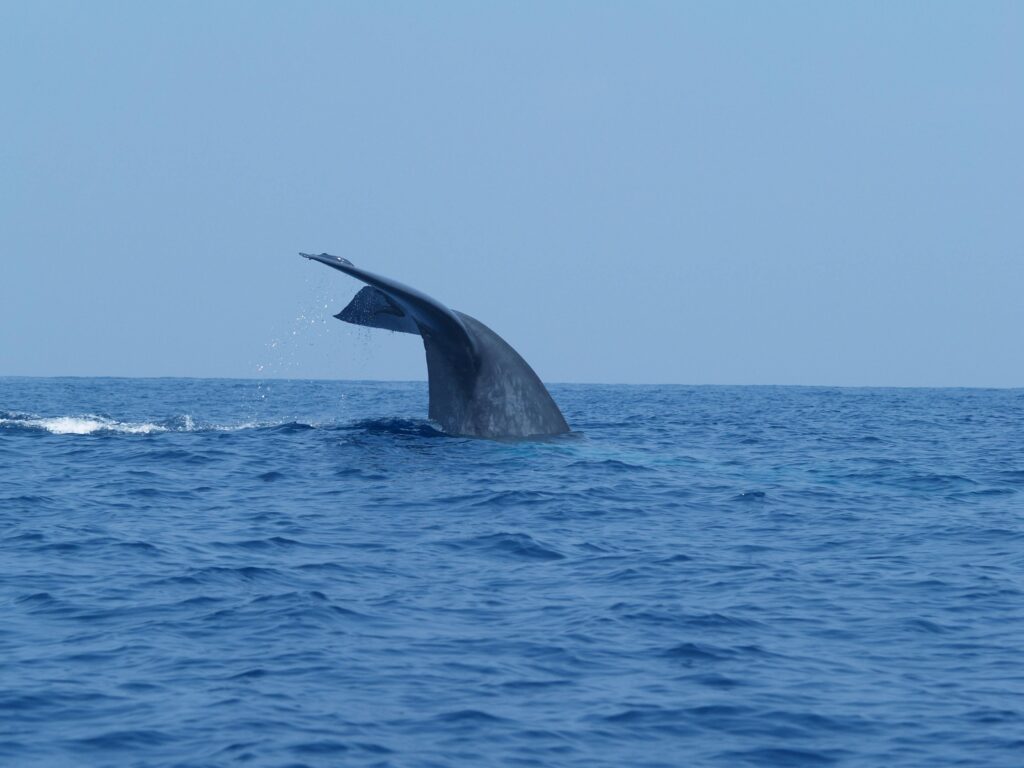
Blue Whales: The Greatest Animals Ever Known
The blue whale (Balaenoptera musculus) stands as nature’s pinnacle of physical magnitude—the largest creature ever to have existed on Earth. Surpassing even the most massive dinosaurs in size, these marine leviathans represent an evolutionary marvel that continues to inspire awe and wonder. In British waters, blue whale sightings remain rare but significant, typically occurring in deeper waters west of Scotland and Ireland, where the continental shelf drops away to the Atlantic depths.
To comprehend the true scale of a blue whale requires more than mere numbers, though these are impressive enough. A fully grown blue whale can reach lengths of up to 30 metres—approximately the same length as a basketball court—and weigh as much as 200 tonnes, equivalent to approximately 33 adult African elephants or roughly 2,000 average-sized humans. The heart alone weighs as much as a small car, pumping 7,000 litres of blood through a circulatory system so vast that a small child could swim through its major blood vessels.
The blue whale’s dimensions become even more remarkable when compared to human-made structures. The creature’s average length of 24-27 metres exceeds the height of a seven-storey building. Its tongue alone weighs as much as an elephant, and a child could crawl through its aorta. When a blue whale calf is born, it measures approximately 7 metres in length—already larger than many smaller whale species—and gains weight at a rate of 90 kilograms per day during its nursing period.
Blue whales in British waters represent the northeastern Atlantic population, scientifically designated as B. musculus musculus. These animals typically reach slightly smaller dimensions than their Southern Ocean counterparts but remain unmistakably massive. Historical whaling records from Scottish and Irish stations document blue whales measuring up to 27 metres, though contemporary sightings are exceedingly rare due to population depletion from commercial whaling.
The diet of these oceanic giants belies their enormous size. Blue whales feed almost exclusively on krill—tiny shrimplike crustaceans that rarely exceed a few centimetres in length. During a single feeding dive, a blue whale can consume up to 3,600 kilograms of krill, filtering the tiny organisms through approximately 800 baleen plates that hang from their upper jaw. This specialized feeding mechanism allows blue whales to consume vast quantities of prey with minimal energy expenditure, a key evolutionary adaptation that supports their enormous body mass.
When a blue whale surfaces to breathe, its exhalation creates a vertical spout that can reach heights of 9 metres—taller than a double-decker bus. This distinctive blow, visible from considerable distances, has historically alerted whalers to their presence and now serves as a vital identification feature for marine mammal observers and whale-watching expeditions.
The vocalizations of blue whales add another dimension to their remarkable nature. They produce the loudest sounds made by any living animal, with low-frequency calls that can reach 188 decibels and travel hundreds of kilometres through the ocean. These vocalizations occur at frequencies often too low for human hearing, typically between 10-40 Hz, and serve communication purposes over vast oceanic distances.
Despite their immense size, blue whales remain among the fastest of the great whales, capable of sustained speeds of 20 kilometres per hour and bursts of up to 50 kilometres per hour when threatened. Their streamlined form, perfectly adapted to marine locomotion after millions of years of evolution, allows them to move through water with remarkable efficiency despite their mass.
The historical relationship between blue whales and British waters is tinged with tragedy. Commercial whaling operations, particularly from Scottish stations in the late 19th and early 20th centuries, contributed to the decimation of North Atlantic blue whale populations. The introduction of factory ships and explosive harpoons made these formerly untouchable giants vulnerable to industrial-scale hunting. By the time international protection was established in 1966, blue whale numbers had fallen by an estimated 97% worldwide, with the northeastern Atlantic population particularly hard-hit.
Today, blue whales remain endangered, with global population estimates ranging from 10,000 to 25,000 individuals—a mere fraction of their pre-whaling abundance. The northeastern Atlantic population that occasionally visits British waters is among the smallest, with perhaps fewer than 1,000 animals. Recent decades have shown encouraging signs of slow recovery, with increased sightings reported west of Ireland and in the Bay of Biscay, suggesting that these magnificent creatures may be reclaiming historical habitats.
When contrasted with the ferries operating in British waters, the blue whale’s dimensions present a fascinating comparison. The largest cross-Channel ferry currently in service, P&O’s “Spirit of Britain,” measures 213 metres in length—approximately seven times longer than a blue whale. However, the ferry’s beam (width) of 30.8 metres is comparable to a blue whale’s length, offering perhaps the most tangible sense of the animal’s scale when visualized alongside a familiar vessel.
The Stena Line superferries operating between Harwich and Hook of Holland represent an even more dramatic comparison, with the “Stena Hollandica” extending to 240 metres—eight times the length of the largest blue whale. Yet in terms of biomass, the comparison becomes more interesting. The ferry’s gross tonnage of approximately 64,000 tonnes measures deadweight, whereas a blue whale’s 200 tonnes represents pure biological material—muscle, bone, blood, and blubber—all functioning as a self-sustaining organism without mechanical assistance.
Speed comparisons reveal both similarities and differences. The “Spirit of Britain” maintains a service speed of 22 knots (approximately 41 kilometres per hour), while the “Stena Hollandica” operates at up to 22.5 knots. These velocities fall within the same range as a blue whale’s maximum burst speed of around 50 kilometres per hour, though the whale achieves this through muscular power alone, without the benefit of diesel engines generating 30,000 kilowatts of power.
Perhaps the most striking contrast lies in energy efficiency. A cross-Channel ferry consumes approximately 1-2 tonnes of fuel per hour during operation, translating to significant energy expenditure over its operating lifetime. A blue whale, meanwhile, fuels its enormous body through one of the most efficient feeding strategies in the animal kingdom, converting tiny krill into the energy needed to power the largest animal on Earth across vast oceanic distances.
The blue whale’s presence in British waters represents a powerful symbol of marine conservation. Once hunted to near-extinction in these very waters, their gradual return signals hope for ecosystem recovery. For ferry passengers traversing the same seas, the knowledge that such magnificent creatures might be swimming in relative proximity—perhaps even directly beneath their vessel—adds a profound dimension to the journey.
The relationship between these two giants—one biological, one mechanical—remains largely unseen but ecologically significant. The noise generated by ferries and other vessels creates an increasingly cluttered acoustic environment that potentially interferes with the blue whale’s long-distance communication. Ship strikes, while rare for this species in British waters due to their limited numbers, represent a theoretical risk that marine conservation policies increasingly address through vessel speed restrictions in critical habitats.
For the fortunate few who have witnessed a blue whale in British waters, the experience is invariably described as transformative. The sight of a creature so massive yet so graceful, surfacing briefly before disappearing into the depths, connects observers to something primordial and humbling. That such enormous beings share waterways with our technological marvels of transportation offers a powerful reminder of our responsibility toward ocean conservation.
As we seek to understand the comparative dimensions of whales and ferries in British waters, the blue whale serves as the ultimate measuring stick—nature’s greatest achievement in size placed alongside humanity’s impressive but still dwarfed engineering prowess. In this pairing, we find a compelling illustration of how natural and human history converge in the waters surrounding these islands, and how the protection of one ultimately ensures the sustainable operation of the other.
The blue whale, though rarely encountered in ferry lanes, reminds us that beneath the surface of familiar shipping routes swim creatures of almost mythological proportions—living representatives of an evolutionary journey spanning millions of years, now sharing their marine environment with the products of human innovation measured in mere centuries.
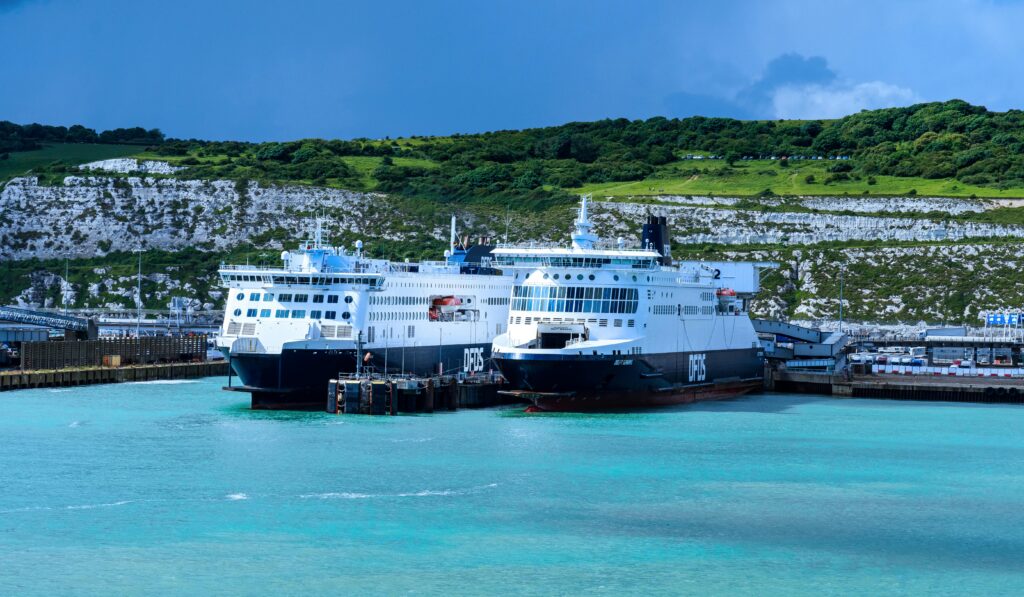
Cross-Channel Ferries: Britain’s Maritime Connections
The English Channel, known simply as “La Manche” or “The Sleeve” to the French, constitutes one of the world’s busiest shipping lanes and hosts the most intensively operated ferry routes in British waters. Spanning just 33 kilometres at its narrowest point between Dover and Calais, this slender waterway has connected Britain to continental Europe throughout recorded history, with regular passenger services evolving from occasional sailings in the Middle Ages to today’s around-the-clock ferry operations.
The modern cross-Channel ferry represents a remarkable confluence of engineering, maritime tradition, and commercial imperatives. These vessels must balance the competing demands of capacity, speed, comfort, and economic viability while navigating waters notorious for their challenging conditions and intense traffic density. When compared to the whales that occasionally traverse the same waters, these ferries reveal fascinating parallels and contrasts in scale, efficiency, and environmental adaptation.
The Dover-Calais route, historically the busiest ferry corridor connecting Britain with continental Europe, provides an ideal case study for understanding the dimensions of these maritime workhorses. P&O Ferries operates some of the largest vessels on this route, including the “Spirit of Britain” and her sister ship “Spirit of France.” These identical vessels, introduced in 2011, represent the pinnacle of modern short-sea ferry design.
The “Spirit of Britain” extends 213 metres from bow to stern—approximately equivalent to two football pitches placed end-to-end. With a beam (width) of 30.8 metres and a gross tonnage of 49,000 tonnes, she towers above the waves at a height of 54 metres from keel to mast. These dimensions dwarf even the largest whale species; the blue whale’s maximum length of approximately 30 metres would fit nearly seven times into the ferry’s overall length.
In terms of carrying capacity, the “Spirit of Britain” can accommodate up to 2,000 passengers and 180 freight vehicles or 1,000 cars—a combined weight that exceeds even the most massive blue whale by a factor of several hundred. The vessel’s twin 12,600 kW diesel-electric engines generate power equivalent to approximately 34,000 horsepower, propelling this floating leviathan at service speeds of 22 knots (41 km/h).
DFDS Seaways, another major operator on the Dover-Calais route, employs slightly smaller vessels such as the “Côte des Flandres” and “Côte des Dunes.” These ships measure approximately 165 metres in length, with a capacity for 1,300 passengers and 1,800 lane metres of vehicles. Though smaller than the P&O giants, they would still comfortably exceed the dimensions of a blue whale by more than five times in length alone.
The economic importance of these vessels to British maritime connectivity cannot be overstated. Prior to the COVID-19 pandemic and Brexit, the Dover-Calais route alone carried approximately 10 million passengers, 2 million cars, and 1.6 million lorries annually—representing roughly 60% of all maritime traffic between the UK and continental Europe. These figures have fluctuated in recent years due to external factors, but the route remains a critical artery for British trade and travel.
Beyond Dover-Calais, other significant cross-Channel routes include Dover-Dunkirk, Newhaven-Dieppe, Portsmouth-Caen, Portsmouth-St. Malo, Poole-Cherbourg, and Plymouth-Roscoff. Each route employs vessels specifically adapted to its particular operational requirements, from the high-speed passenger focus of the Portsmouth routes to the freight-oriented services from eastern Channel ports.
The Brittany Ferries vessel “Pont-Aven,” operating primarily between Plymouth and Santander with cross-Channel services to Roscoff, represents one of the more luxurious ferry experiences in British waters. At 184 metres in length and with a capacity for 2,400 passengers and 650 cars, this cruise-ferry hybrid offers amenities more commonly associated with cruise ships, including a swimming pool, spa, and multiple dining venues.
When considering the historical development of cross-Channel ferries, the rate of increase in vessel size becomes particularly striking. The first dedicated car ferry on the Dover-Calais route, introduced in 1930, measured just 98 metres in length with a capacity for 168 cars and 1,200 passengers. By the 1970s, the first generation of roll-on/roll-off vessels such as the “Free Enterprise” series had grown to approximately 130 metres, while the “Superferry” era of the 1980s pushed dimensions beyond 150 metres.
This progressive enlargement of cross-Channel ferries reflects both technological advancements and commercial pressures. Larger vessels achieve greater economies of scale, reducing per-passenger and per-vehicle operating costs while accommodating growing traffic volumes. However, they also present greater challenges in terms of manoeuvrability, port infrastructure requirements, and environmental impact.
The physical environment of the English Channel itself has shaped ferry design in distinctive ways. The relatively shallow depth—averaging 120 metres but significantly less at approaches to ports like Dover—limits draft (the vertical distance between waterline and keel) to typically around 6 metres. This constraint has encouraged the development of wider, shallower-hulled vessels compared to those operating in deeper waters such as the Irish Sea or North Sea.
Additionally, the Channel’s notorious weather patterns, with frequent strong winds and steep, short-period waves, have necessitated robust hull designs capable of maintaining stability and passenger comfort in challenging conditions. Modern ferries incorporate stabilization systems including fin stabilizers and anti-roll tanks to counteract the pitching and rolling motions that can lead to passenger discomfort.
From an engineering perspective, cross-Channel ferries represent an impressive balancing act between competing design priorities. The imperative for quick turnaround times at ports has led to the refinement of bow and stern door systems that allow simultaneous loading and unloading of vehicles, typically completing the entire process in under 30 minutes for a vessel carrying hundreds of vehicles.
The internal layout of these vessels reveals their dual nature as both passenger transport and cargo carriers. Typically spanning 8-10 decks, modern cross-Channel ferries dedicate their lower levels to vehicle storage, with cars, coaches, and freight vehicles arranged in carefully organized lanes to maximize capacity and facilitate rapid embarking and disembarking. The upper decks house passenger facilities, from basic seating areas on shorter routes to elaborate entertainment complexes on longer crossings.
Propulsion systems have evolved significantly, with contemporary vessels employing a combination of diesel-electric or hybrid power plants driving either traditional propellers or newer azimuth thrusters—podded propulsion units that can rotate 360 degrees, dramatically improving manoeuvrability. These technological advancements allow modern ferries to navigate busy ports with precision and respond effectively to the challenging weather conditions frequently encountered in the Channel.
When comparing cross-Channel ferries to the whale species that occasionally inhabit the same waters, one finds both striking differences and surprising parallels. In terms of pure dimensions, even the smallest operational ferry dwarfs the largest whale species. However, in terms of biomechanical efficiency and environmental adaptation, the comparison tilts decisively in favor of the natural world.
A blue whale propels its 200-tonne mass through water using approximately 0.5% of the energy that would be required for a ship of equivalent size. This remarkable efficiency results from millions of years of evolutionary refinement, producing a hydrodynamic body shape, flexible skin texture, and propulsion system (the powerful fluked tail) that human engineers can only attempt to emulate.
By contrast, cross-Channel ferries consume between 1-2 tonnes of fuel per operational hour, generating not only propulsive force but also the electricity needed to power hotel services for passengers and crew. Despite significant advancements in hydrodynamic design and propulsion efficiency, these vessels remain fundamentally more energy-intensive than their biological counterparts in the marine environment.
The ecological footprint of cross-Channel ferry operations extends beyond fuel consumption to encompass various environmental impacts, from underwater noise pollution to wake effects and potential chemical contamination from anti-fouling compounds. These impacts directly affect the marine habitat shared with whales and other cetaceans, creating both visible and invisible barriers to their natural movement and behavior.
Recent years have seen growing attention to these environmental concerns, with ferry operators implementing various measures to reduce their ecological impact. These include the installation of exhaust gas cleaning systems (scrubbers), experimental hydrogen fuel cells on smaller vessels, and operational adjustments such as reduced speeds in sensitive marine habitats. The introduction of shore power facilities at ports allows vessels to shut down their engines while docked, significantly reducing emissions in harbor areas.
The future of cross-Channel ferry design points toward further innovations in sustainable operation, with several operators exploring hybrid or fully electric propulsion for shorter routes. However, the physical constraints of battery technology currently limit such applications to smaller vessels and shorter distances than the primary Dover-Calais corridor.
For the millions of passengers who travel aboard these vessels annually, the cross-Channel ferry represents both a utilitarian transport link and a distinctive maritime experience. The brief voyage offers opportunities to observe marine wildlife, including occasional glimpses of the smallest whale species found in the Channel—the harbour porpoise—as well as various dolphin species and, very rarely, minke whales.
As we consider the coexistence of these human-engineered transport vessels and the marine mammals that occasionally share their routes, the contrasting scales become particularly apparent. Even the smallest operational ferry on cross-Channel routes exceeds the dimensions of the largest whale species, yet in terms of evolutionary success, longevity of design, and environmental harmony, the leviathans of the deep maintain clear superiority over their human-made counterparts.
The cross-Channel ferry, for all its impressive engineering and economic importance, remains a relative newcomer to these waters—a technological solution to the age-old challenge of crossing from island to continent that whales have been accomplishing without human assistance for millions of years.
Fin Whales: The Greyhounds of the Sea
The fin whale (Balaenoptera physalus) holds a distinguished position among the cetaceans found in British waters, being the second-largest animal on Earth after its close relative, the blue whale. Often nicknamed the “greyhound of the sea” due to its sleek body and remarkable speed, this magnificent creature represents a perfect balance between immense size and hydrodynamic efficiency. In the context of our size comparisons with ferry vessels, the fin whale offers perhaps the most instructive parallel, combining massive dimensions with design features optimized for rapid, efficient movement through water.
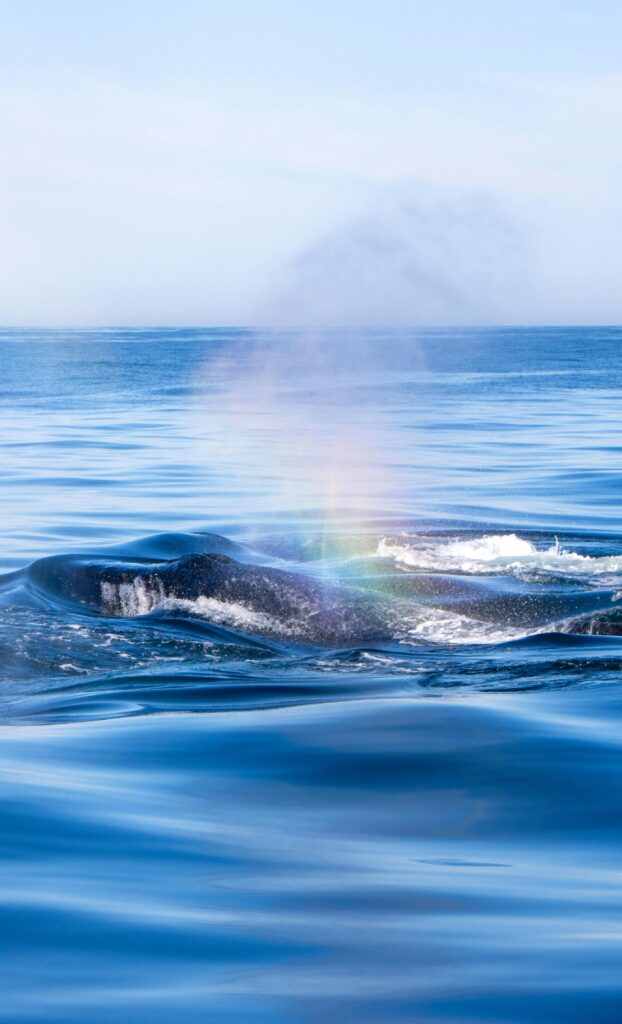
Adult fin whales typically reach lengths of 18-22 metres, with females slightly larger than males—a common characteristic among baleen whales. Their weight ranges from 40-80 tonnes, placing them firmly among the giants of the animal kingdom yet still noticeably smaller than their blue whale cousins. What distinguishes fin whales is their exceptionally streamlined form; with a length-to-width ratio more extreme than other large whales, they appear almost impossibly slender when viewed from above, tapering to a remarkably narrow tail stock.
This streamlined design enables fin whales to achieve speeds of up to 37 kilometres per hour, making them among the fastest of all cetaceans despite their enormous size. Their nickname as “greyhounds” is well-earned, as they can outpace many smaller whale species and maintain cruising speeds that would challenge even the most sophisticated human vessels if sustained over long periods.
The fin whale’s distinctive appearance makes identification relatively straightforward for those fortunate enough to encounter one in British waters. The most obvious feature is asymmetrical coloration on the head, with the right lower jaw white and the left dark—a characteristic found in no other whale species. Their dorsal fin, positioned far back on the body, is relatively tall and falcate (sickle-shaped), becoming visible well after the animal’s blow when it surfaces. The blow itself rises as a vertical column to impressive heights of 4-6 metres—easily visible from considerable distances on calm days.
In British waters, fin whales are most commonly sighted west of Ireland and Scotland, particularly along the continental shelf edge where upwelling currents create productive feeding grounds. They occasionally enter the Celtic Sea and even, rarely, the Irish Sea, though their preference for deeper waters generally keeps them away from the busiest ferry routes in the English Channel. However, they do occur in the Bay of Biscay, where they may share waters with ferries operating between Portsmouth or Plymouth and northern Spain.
The feeding behaviour of fin whales differs somewhat from that of blue whales, demonstrating greater dietary flexibility. While krill remains a primary food source, fin whales also consume small schooling fish such as herring, capelin, and sandeel, adjusting their diet according to availability. This adaptability allows them to exploit different feeding opportunities throughout British waters, particularly during summer months when productivity is highest.
Their feeding technique, known as lunge feeding, involves accelerating toward a prey concentration with mouth closed, then opening the enormous jaws to engulf vast volumes of water and food. The throat pleats—expandable grooves running from chin to navel—allow the mouth cavity to expand dramatically, while the baleen plates filter out water and retain food items. A single fin whale can consume up to one tonne of food daily during intensive feeding periods.
When considering the dimensions of fin whales in comparison to ferries operating in British waters, several interesting parallels emerge. The Stena Line’s “Stena Adventurer,” operating between Holyhead and Dublin, measures 211 metres in length—approximately ten times the length of an average fin whale. However, the ferry’s beam (width) of 25 metres is not dramatically larger than the fin whale’s body length, offering a tangible sense of the animal’s scale.
The DFDS vessel “King Seaways,” which operates between Newcastle and Amsterdam, presents another instructive comparison. At 163 metres in length and 28 metres in beam, this North Sea ferry would accommodate approximately eight fin whales placed end-to-end along its length. Yet in terms of weight, the comparison becomes more striking—the ferry’s 31,788 gross tonnage significantly exceeds even the largest fin whale’s 80-tonne mass, highlighting the greater density and structural complexity of the human-engineered vessel.
From an engineering perspective, both fin whales and modern ferries represent solutions to the challenge of efficient movement through water, albeit arrived at through vastly different processes—one through millions of years of natural selection, the other through human design innovation. The fin whale’s hydrodynamic efficiency remains unmatched by human technology; studies indicate they can maintain cruising speeds using only 20% of the theoretical minimum power required for a rigid-hulled vessel of equivalent size.
This remarkable efficiency derives from several evolutionary adaptations. The fin whale’s skin plays a crucial role, with specialized properties that reduce turbulence and drag. The skin’s compliance—its ability to deform slightly as water flows past—delays the onset of turbulence, while its smooth, almost rubbery surface minimizes friction. Engineers have attempted to replicate these properties through various hull coatings and designs, but have yet to achieve comparable results.
The fin whale’s propulsion system—its powerful fluked tail—represents another marvel of natural engineering. Unlike a ship’s propeller, which generates thrust through rotational motion, the whale’s horizontal tail flukes move up and down in a complex undulating pattern that captures and redirects energy from the surrounding water with remarkable efficiency. This movement creates thrust while minimizing energy loss, allowing the animal to cover vast distances on minimal caloric input.
By contrast, the ferry’s propulsion system typically relies on fixed or controllable-pitch propellers driven by powerful diesel engines or, increasingly, diesel-electric combinations. While modern propeller design has advanced significantly, incorporating features such as skewed blades and optimized pitch to improve efficiency and reduce cavitation, these mechanical systems remain fundamentally less efficient than the fin whale’s biological propulsion.
The acoustic signature of these two ocean giants differs dramatically as well. Fin whales produce among the loudest low-frequency vocalizations in the animal kingdom, with their distinctive “20 Hz pulses” detectable hundreds of kilometres away. These sounds, too low for human hearing in most cases, serve communication purposes across vast oceanic distances. Meanwhile, ferries generate broadband underwater noise from engines, propellers, and hull movement, creating an acoustic footprint that potentially interferes with cetacean communication and navigation.
The fin whale’s life history contrasts sharply with the operational lifetime of a ferry. A typical modern ferry might remain in service for 25-30 years before economic and technological obsolescence necessitates replacement. Fin whales, meanwhile, can live up to 90 years in the wild, representing one of the longest lifespans among mammals. During this extended lifetime, they may travel hundreds of thousands of kilometres—equivalent to circumnavigating the globe multiple times.
Historically, fin whales were heavily targeted by commercial whaling operations, including those based in Scotland and Ireland. Their combination of large size (yielding substantial oil and baleen) and relatively high speeds made them challenging but lucrative targets for whalers. By the time international protection was established in the 1970s and 1980s, North Atlantic populations had been severely depleted.
Current estimates suggest approximately 50,000-90,000 fin whales remain worldwide, with perhaps 15,000 in the North Atlantic. While this represents a significant recovery from the nadir of commercial whaling, numbers remain far below pre-exploitation levels. The species is classified as “vulnerable” on the IUCN Red List, though its status in the North Atlantic is more positive than in some other regions.
For ferry passengers crossing waters frequented by fin whales—particularly those travelling to Spain from Plymouth or Portsmouth across the Bay of Biscay—the possibility of sighting these magnificent animals adds an exciting dimension to the journey. Many ferry companies now employ wildlife officers during summer months, offering interpretive programmes and deck watches to help passengers spot and appreciate marine wildlife, including fin whales when present.
The relationship between fin whales and ferry operations in shared waters presents both challenges and opportunities. Ship strikes remain a concern, particularly in areas of higher fin whale density such as the western approaches to the English Channel and the Bay of Biscay. Various mitigation measures have been implemented, including voluntary speed restrictions in sensitive areas and the establishment of formal shipping lanes that avoid known cetacean hotspots.
The future of this relationship will depend on continuing efforts to understand and protect fin whale populations while maintaining essential maritime transportation links. Technological advances in vessel design, including quieter propulsion systems and improved detection capabilities for whales in shipping lanes, offer promising avenues for reducing negative interactions.
As we contemplate the parallel existence of these two ocean giants—one biological, one mechanical—the fin whale stands as a powerful reminder of nature’s engineering prowess. Despite centuries of human innovation in maritime technology, we have yet to design a vessel that matches the efficiency, longevity, and environmental harmony achieved by the “greyhound of the sea.”
The fin whale, with its perfect balance of immense size and hydrodynamic efficiency, offers valuable lessons for naval architects and marine engineers seeking to improve vessel design. By studying the evolutionary solutions embodied in these magnificent animals, we may develop more efficient, less environmentally impactful vessels for future generations—ensuring that fin whales and ferries can continue to share British waters in sustainable coexistence.
North Sea Passenger Ships: History and Modern Marvels
The North Sea, that vast and often tempestuous body of water separating Great Britain from continental Europe, has long served as one of the busiest maritime highways in the world. Spanning approximately 570,000 square kilometres, its relatively shallow waters (average depth of 95 metres) have hosted shipping routes of immense commercial and cultural significance for centuries. Today, the passenger vessels traversing these waters represent some of the largest ferries operating under the British flag, dwarfing both their cross-Channel counterparts and the marine mammals that occasionally share their routes.
The primary North Sea ferry routes connect eastern British ports with destinations in the Netherlands, Germany, Belgium, Denmark, Norway, and Sweden. Unlike the brief hour-long crossings of the English Channel, these routes involve significantly longer journeys—typically overnight passages ranging from 8 to 17 hours. This operational reality has shaped vessel design in distinctive ways, creating ships that function as floating hotels as much as transportation links.
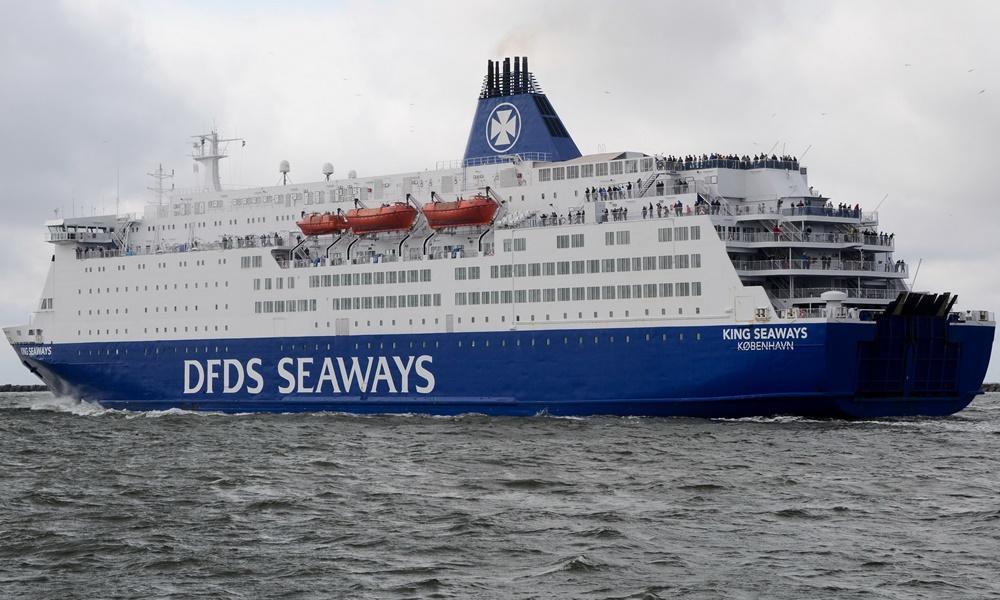
The Newcastle to Amsterdam route, operated by DFDS Seaways, exemplifies the scale and sophistication of modern North Sea ferries. The sister ships “King Seaways” and “Princess Seaways” each measure approximately 163 metres in length with a beam of 28 metres—dimensions that would accommodate five to eight adult fin whales placed end-to-end. These vessels typically carry up to 1,500 passengers and 600 cars per crossing, with amenities including multiple restaurants, bars, entertainment venues, and various cabin categories.
The Harwich to Hook of Holland service, operated by Stena Line, employs even larger vessels. The “Stena Hollandica” and “Stena Britannica,” introduced in 2010, stretch an impressive 240 metres in length with a beam of 32 metres, making them among the largest ferries operating in European waters. With a gross tonnage exceeding 64,000, these superferries can accommodate 1,200 passengers and 230 cars, plus significant freight capacity. Their dimensions exceed even those of the blue whale by a factor of eight in length.
The historical development of North Sea passenger vessels reveals a fascinating evolution from humble beginnings to today’s floating giants. Regular steamship services began in the mid-19th century, with vessels typically measuring 50-70 metres in length and carrying modest numbers of passengers in basic conditions. The SS Prague, operating between Hull and Rotterdam from 1866, represented an early example, measuring just 63 metres with accommodation for 100 passengers.
By the early 20th century, purpose-built passenger steamers had grown substantially, with vessels like the SS Amsterdam (1894) reaching 106 metres in length and offering considerably improved amenities. The interwar period saw further developments, though two world wars—in which many passenger vessels were requisitioned for military service—interrupted the natural progression toward larger, more comfortable ships.
The post-war era witnessed a revolution in North Sea ferry design with the introduction of dedicated car ferries. The MS Arneville, introduced on the Harwich-Hook of Holland route in 1958, measured 112 metres and could carry 200 cars and 875 passengers—modest by today’s standards but revolutionary at the time. The true transformation came in the 1970s and 1980s with purpose-built roll-on/roll-off passenger vessels that established the template for modern North Sea ferries.
The MS Koningin Beatrix, introduced in 1986 for service between Harwich and Hook of Holland, represented a milestone in North Sea ferry development. At 161 metres in length and with capacity for 1,400 passengers and 350 cars, she established new standards for size and passenger amenities. However, even this impressive vessel would be dwarfed by subsequent generations of superferries.
The 21st century has seen continued growth in vessel dimensions, driven by commercial pressures for greater economies of scale and enhanced passenger experiences. The introduction of the “Stena Hollandica” and “Stena Britannica” in 2010 represented a step-change in size, with each vessel nearly 80 metres longer than their predecessors on the same route.
What distinguishes North Sea ferries from their cross-Channel counterparts is not merely size but operational philosophy. These vessels are designed for extended voyages through potentially challenging conditions, requiring greater stability, more comprehensive passenger facilities, and higher standards of accommodation. While cross-Channel ferries might offer limited seating and basic refreshment options for their brief transits, North Sea vessels provide a cruise-like experience with multiple dining venues, entertainment options, and private cabins.
The technical specifications of these vessels reflect their demanding operational environment. Hull forms are designed for stability in the often rough North Sea conditions, with deeper drafts than Channel ferries (typically 6-7 metres compared to 5-6 metres) and more pronounced bow sections to handle larger waves. Stabilization systems, including fin stabilizers and anti-roll tanks, are more comprehensive than on shorter-route vessels.
Propulsion systems represent another area of distinction. The “Stena Hollandica” class employs a sophisticated power plant consisting of four Wärtsilä 12V46 diesel engines, each generating 12,600 kW, for a combined output of 50,400 kW (approximately 67,600 horsepower). This enormous power drives the vessel at service speeds of 22 knots (41 km/h) through two controllable-pitch propellers, supplemented by bow and stern thrusters for enhanced maneuverability in port.
The internal layout of these floating giants reveals their dual nature as transport links and passenger facilities. The “Stena Hollandica,” for instance, comprises 12 decks, with vehicle storage on the lower levels (typically decks 3-5), passenger accommodation and public areas on the middle decks (6-10), and crew accommodation and technical spaces on the uppermost levels. The vessel contains 538 passenger cabins, ranging from standard inside rooms to luxury suites, plus dedicated freight driver accommodation.
When comparing these North Sea leviathans to the whale species that occasionally inhabit the same waters, the contrast in scale becomes particularly apparent. Even the largest blue whale, at 30 metres in length, would occupy just one-eighth of the “Stena Hollandica’s” 240-metre extent. However, in terms of biomass and structural complexity, the comparison becomes more nuanced.
A blue whale’s 200-tonne mass represents pure biological material—muscle, bone, blood, and blubber—all functioning as an integrated organism. The ferry’s 64,000 gross tonnage measures volume rather than mass, but even accounting for this difference, the vessel’s structural weight far exceeds that of any whale. However, the whale achieves its remarkable capabilities through biological systems of astounding complexity, while the ferry relies on mechanical and electrical systems requiring constant maintenance and eventual replacement.
The environmental footprint of North Sea ferry operations presents significant challenges. These large vessels consume between 60-80 tonnes of fuel daily during operation, generating substantial emissions of carbon dioxide, sulphur oxides, and nitrogen oxides. Recent regulatory changes, including the establishment of Emission Control Areas in the North Sea, have prompted operators to invest in scrubber technology or shift to lower-sulphur fuels, though the fundamental environmental impact remains considerable.
By contrast, whale species navigate the same waters with minimal environmental disruption, having evolved over millions of years to achieve near-perfect harmony with their marine environment. Their propulsion systems generate no chemical pollutants, their bodies are fully biodegradable at life’s end, and their presence typically enhances rather than degrades ecosystem health through nutrient cycling and other ecological functions.
The acoustic impact of these vessels represents another area of environmental concern. North Sea ferries generate substantial underwater noise from engines, propellers, and hull movement, potentially disrupting the communication and navigation systems of cetaceans. Whales rely heavily on sound for social interaction, finding food, and avoiding hazards—functions that can be compromised by the acoustic footprint of large vessels.
Recent years have seen growing attention to these environmental concerns, with ferry operators implementing various measures to reduce their ecological impact. These include the installation of shore power connections that allow vessels to shut down engines while in port, the adoption of hybrid propulsion systems on some smaller vessels, and operational adjustments such as speed optimization to reduce fuel consumption and emissions.
The “Stena Hollandica” class incorporates several environmental innovations, including heat recovery systems that capture waste heat from engine exhaust for use in passenger areas, advanced waste management facilities, and hull forms optimized for reduced fuel consumption. However, these incremental improvements occur within a transportation model that remains fundamentally energy-intensive compared to its biological counterparts in the marine environment.
For passengers travelling aboard these North Sea giants, the voyage offers distinct pleasures and experiences. Unlike the brief Channel crossing, these overnight journeys provide time to appreciate the maritime environment, with opportunities for wildlife observation (particularly during summer months), relaxed dining, and entertainment options. Many operators now include wildlife observation programmes, with dedicated viewing areas and occasional naturalist guides to enhance the experience.

The whale species most commonly encountered on North Sea routes include the minke whale, particularly in northern sectors, and occasionally fin whales in deeper waters toward the Norwegian coast. While direct sightings from ferries remain relatively rare due to the animals’ generally offshore distribution and the vessels’ fixed routes, the knowledge that these magnificent creatures share the same waters adds a profound dimension to the journey.
The future of North Sea ferry design points toward continued innovation in vessel size, efficiency, and environmental performance. Several operators are exploring alternative fuel systems, including liquefied natural gas (LNG) and hydrogen for smaller vessels. The introduction of battery technology for hybrid propulsion represents another promising development, though the energy requirements of these large vessels currently exceed the capabilities of fully electric systems for extended voyages.
As we consider the parallel existence of these human-engineered giants and their biological counterparts in North Sea waters, the contrast in evolutionary timescales becomes particularly apparent. The modern supergerry represents just the latest iteration in a maritime technological development spanning mere centuries, while the whale species navigating the same waters are the products of evolutionary processes extending over tens of millions of years.
Yet despite this vast disparity in developmental timeframes, both entities face uncertain futures shaped by human activity. For ferry operators, challenges include rising fuel costs, environmental regulations, and competition from alternative transport modes. For whale populations, threats encompass climate change impacts on prey distribution, chemical and noise pollution, and the ever-present risk of vessel strikes.
The North Sea, once a hunting ground for commercial whalers targeting the very species that now struggle to recover their former abundance, has transformed into a complex maritime environment where human transportation needs and wildlife conservation imperatives increasingly intersect. Finding sustainable balance between these potentially competing priorities represents one of the significant challenges for marine management in coming decades.
The passenger vessels plying North Sea routes today—enormous, sophisticated, and remarkably capable—stand as testament to human engineering prowess and economic enterprise. Yet they remain, in many respects, less perfectly adapted to their marine environment than the whale species that occasionally swim in their vicinity—biological marvels whose design has been refined through millennia of natural selection for optimal performance in precisely these waters.
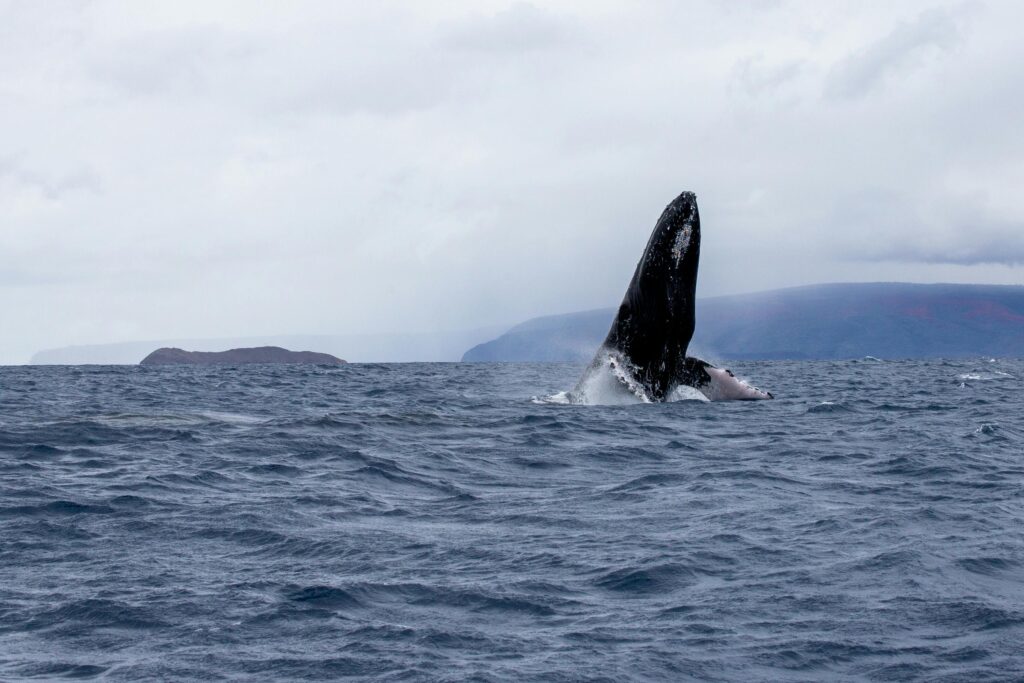
Humpback Whales: The Acrobats of the Deep
Among the great whales found in British waters, none captures the public imagination quite like the humpback whale (Megaptera novaeangliae). Known for their spectacular aerial displays, haunting songs, and distinctive appearance, these charismatic giants represent a perfect combination of impressive size and extraordinary agility. Though less massive than the blue or fin whales discussed in previous chapters, the humpback offers perhaps the most visible and dramatic example of cetacean presence in waters shared with human maritime traffic.
Adult humpback whales typically measure 14-17 metres in length, with females slightly larger than males—a common trait among baleen whales. Their weight ranges from 25-40 tonnes, placing them firmly among the larger whale species but well below the dimensions of their blue and fin whale relatives. What distinguishes humpbacks is their robust, somewhat stocky build compared to the more streamlined rorqual whales, with proportionally longer pectoral fins that can reach nearly one-third of their body length.
These extraordinary appendages—the longest limbs of any animal on Earth relative to body size—give the genus its scientific name: Megaptera, meaning “large-winged.” The pectoral fins, often white on their undersides, provide remarkable maneuverability and play crucial roles in the whale’s feeding techniques and social interactions. When sighted from vessels, these distinctive white fins often provide the first clue to the animal’s identity.
The humpback’s physical appearance is unmistakable to the trained observer. Beyond the extraordinary pectoral fins, they display a distinctively humped dorsal fin (giving the species its common name), followed by a series of small bumps along the spine toward the tail flukes. Their heads are covered with characteristic knobs called tubercles, each containing a hair follicle that may serve sensory functions. The throat features prominent pleats—expandable grooves running from chin to navel—that allow the mouth cavity to expand dramatically during feeding.
In British waters, humpback whales have made a remarkable recovery following historical exploitation. Once rare visitors, they are now sighted with increasing frequency, particularly west of Scotland and Ireland, in the Celtic Sea, and occasionally even in the North Sea. Their annual migration typically brings them to British waters during summer months, when they feed intensively on krill and small schooling fish before departing for tropical breeding grounds in winter.
The feeding behaviour of humpbacks represents one of their most distinctive characteristics. Unlike the simple lunge-feeding of blue and fin whales, humpbacks employ various sophisticated techniques, including the spectacular “bubble-net feeding” method. This cooperative strategy involves multiple whales swimming in circles while releasing bubbles to create a curtain that concentrates prey, followed by a coordinated surge through the centre with mouths agape to engulf the trapped fish or krill.
Individual humpbacks can consume up to 1.5 tonnes of food daily during intensive feeding periods—a remarkable quantity that highlights the prodigious appetite required to sustain their massive bodies and energetic activities. Like other baleen whales, they filter this food through baleen plates—approximately 270-400 fibrous, keratin structures hanging from the upper jaw that strain water while retaining prey items.
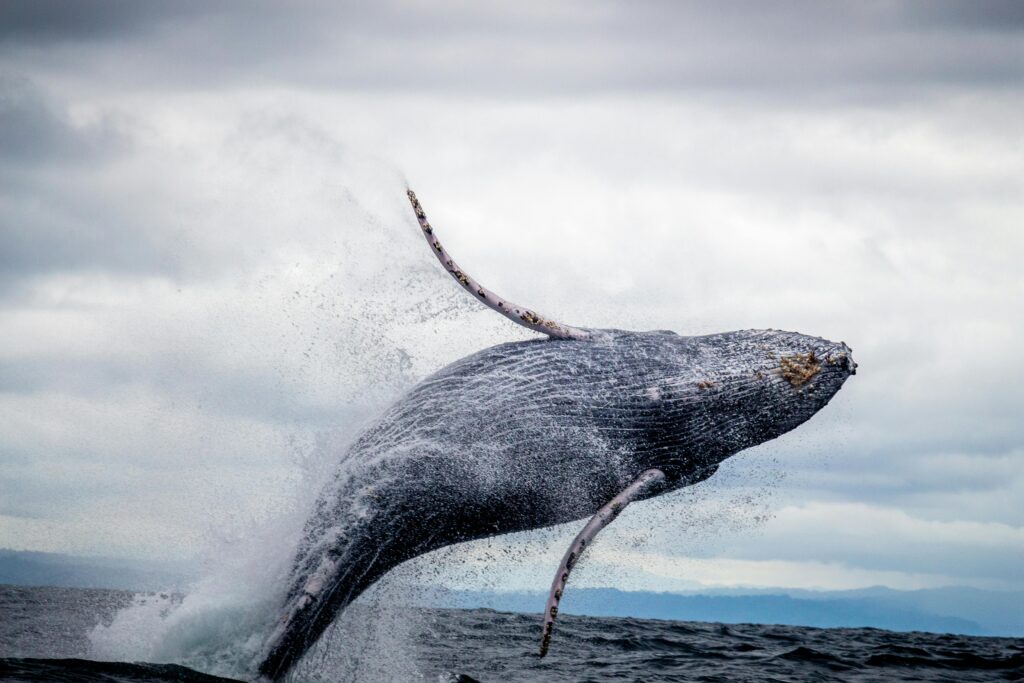
Perhaps most famous are the humpback’s acrobatic displays, which include breaching (launching up to 90% of their body out of water), tail-slapping, fin-slapping, and spy-hopping (rising vertically with the head above water). These behaviours serve various social and physiological functions, from communication and parasite removal to sheer exuberance, though some aspects remain mysterious to scientists. For ferry passengers fortunate enough to witness such displays, the experience invariably ranks among the most memorable moments of their journey.
Equally renowned are the humpback’s complex songs—among the most elaborate vocalizations in the animal kingdom. Male humpbacks produce long, structured sequences of moans, cries, and other sounds that can continue for hours and carry for distances exceeding 30 kilometres underwater. These songs follow specific patterns shared among whales in a population but evolve gradually over time in a form of cultural transmission. Though primarily associated with breeding grounds, occasional singing has been recorded in feeding areas, including British waters.
When comparing humpback whales to ferries operating in British waters, several instructive parallels emerge. The Stena Line vessel “Stena Europe,” operating between Fishguard in Wales and Rosslare in Ireland, measures 149 metres in length—approximately nine times longer than an average humpback whale. However, the ferry’s beam (width) of 24.3 metres is closer to the whale’s length, offering a more tangible sense of the animal’s scale.
The P&O Ferries vessel “European Causeway,” operating between Cairnryan in Scotland and Larne in Northern Ireland, presents another useful comparison. At 123 metres in length and 19.5 metres in beam, this short-sea ferry would accommodate approximately eight humpback whales placed end-to-end along its length. In mass terms, the ferry’s 20,646 gross tonnage significantly exceeds the humpback’s 30-40 tonne weight, though this comparison involves different measurement systems.
What makes the humpback whale particularly remarkable in comparison to human vessels is its combination of substantial size with extraordinary agility. Despite weighing up to 40 tonnes, a humpback can launch itself entirely clear of the water in a breach, spin in mid-air, and re-enter with precision—a feat no vessel of comparable size could possibly achieve. This maneuverability stems from their unique body design, particularly those extraordinarily long pectoral fins that function like wings underwater, generating lift and enabling precise control of movement in three dimensions.
From an engineering perspective, the humpback’s pectoral fins have attracted significant attention for their hydrodynamic efficiency. The leading edge features large, irregular bumps called tubercles that, contrary to conventional engineering wisdom about smooth surfaces, actually enhance performance by reducing drag and increasing lift. This discovery has inspired “biomimetic” designs in various applications, from wind turbine blades to industrial fans and surfboard fins—examples of human engineers learning from natural design solutions refined over millions of years of evolution.
The humpback’s propulsion system—its powerful fluked tail—represents another marvel of natural engineering. Unlike a ship’s propeller, which generates thrust through rotational motion, the whale’s horizontal tail flukes move up and down in a complex undulating pattern that captures and redirects energy from the surrounding water with remarkable efficiency. This movement creates thrust while minimizing energy loss, allowing the animal to sustain energetic activities like breaching on minimal caloric input.
By contrast, ferry propulsion systems typically rely on fixed or controllable-pitch propellers driven by powerful diesel engines or, increasingly, diesel-electric combinations. While modern propeller design has advanced significantly, incorporating features such as skewed blades and optimized pitch to improve efficiency and reduce cavitation, these mechanical systems remain fundamentally less efficient than the humpback’s biological propulsion.
The acoustic worlds of humpback whales and ferries could hardly be more different. The whale’s vocalizations represent sophisticated communication adapted to the ocean’s natural acoustic properties, with sounds precisely tailored to travel effectively through water and convey complex information. These vocalizations, particularly songs, contain information about identity, reproductive status, and potentially location or environmental conditions.
Ferry vessels, meanwhile, generate underwater noise primarily as an incidental byproduct of their operation. Engine vibrations, propeller cavitation, and hull movement create a complex acoustic signature that can travel considerable distances underwater—potentially interfering with cetacean communication and navigation. Recent studies suggest that growing ambient noise levels in busy shipping lanes may force whales to modify their vocalization patterns, with potential long-term consequences for social cohesion and reproductive success.
The humpback’s life history contrasts sharply with a ferry’s operational timeline. A typical modern ferry might remain in service for 25-30 years before economic and technological obsolescence necessitates replacement. Humpback whales routinely live 45-50 years in the wild, with some individuals documented reaching 80-90 years. During this extended lifetime, they may travel more than 25,000 kilometres annually on their migrations between feeding and breeding grounds—equivalent to circling the Earth every two years.
Historically, humpback whales were heavily targeted by commercial whaling operations, with British and Norwegian stations in the North Atlantic contributing significantly to their depletion. Their relatively slow swimming speeds, coastal distribution, and tendency to float after death made them vulnerable targets despite their acrobatic capabilities. By the time international protection was established in 1966, global populations had been reduced by an estimated 90%.
The subsequent recovery of humpback whales represents one of conservation’s more positive stories. Current estimates suggest approximately 80,000-135,000 individuals worldwide, with the North Atlantic population showing particularly strong increases. Recent years have witnessed a notable expansion of their range in British waters, with sightings now recorded in areas where they were absent for generations during the whaling era.
For ferry passengers crossing waters frequented by humpbacks—particularly those travelling west of Scotland or between Wales and Ireland—the possibility of sighting these magnificent animals adds an exciting dimension to the journey. Their characteristic blows, reaching 2-3 metres in height, and distinctive surfacing pattern with the pronounced dorsal fin appearing well after the initial surfacing, make them relatively easy to identify even for novice observers.
The relationship between humpback whales and ferry operations presents both challenges and opportunities. Ship strikes remain a concern, particularly as recovering populations expand into areas with established shipping traffic. Various mitigation measures have been implemented, including vessel speed restrictions in sensitive areas and the establishment of dedicated shipping lanes that avoid known cetacean hotspots.
However, the humpback’s generally more coastal distribution compared to larger whale species means they more frequently encounter vessels, including ferries. Their acrobatic nature may increase visibility to attentive crews, potentially reducing collision risk, but their unpredictable movements during active surface behaviours could theoretically increase hazards. Navigation officers on routes through areas frequented by humpbacks receive specific training in whale observation and avoidance procedures.
The future of this relationship will depend on continuing efforts to understand and protect humpback populations while maintaining essential maritime transportation links. Technological advances in vessel design, including quieter propulsion systems and improved detection capabilities for whales in shipping lanes, offer promising avenues for reducing negative interactions.
The humpback whale’s remarkable recovery in British waters represents a conservation success story that provides hope for other depleted marine species. From near-absence during the latter whaling era, these charismatic giants have returned to reclaim ancestral feeding grounds, including areas traversed by busy ferry routes. Their increasing presence offers opportunities for public engagement with marine conservation issues, as passengers who witness these magnificent animals firsthand invariably develop greater appreciation for their protection.
As we continue our exploration of the relative dimensions of whales and ferries sharing British waters, the humpback stands as perhaps the most visible and engaging representative of cetacean life. Their spectacular aerial displays, haunting songs, and distinctive appearance capture the imagination in ways that statistics and measurements alone cannot convey. In this magnificent species, we find a perfect ambassador for the grandeur and vulnerability of marine life existing alongside our maritime transportation networks.Retry
Isle of Man and Scottish Ferries: Island Connections
The waters surrounding the British Isles are dotted with numerous islands, each dependent on ferry services as their lifeline to the mainland. From the Isle of Man in the Irish Sea to the extensive archipelagos of Scotland’s Hebrides and Northern Isles, these island communities rely on specialised vessels that differ markedly from the larger cross-Channel and North Sea ferries explored in previous chapters. These island-serving ferries, though typically smaller in dimension, navigate some of the most challenging maritime environments in British waters and play a vital socioeconomic role disproportionate to their physical size.
The Isle of Man, situated in the middle of the Irish Sea, represents a fascinating case study in island ferry operations. With a population of approximately 85,000, this self-governing Crown dependency maintains connections to England, Ireland, Northern Ireland, and occasionally Wales through a dedicated ferry operator, the Isle of Man Steam Packet Company—established in 1830 and claiming the title of oldest continuously operating passenger shipping company in the world.
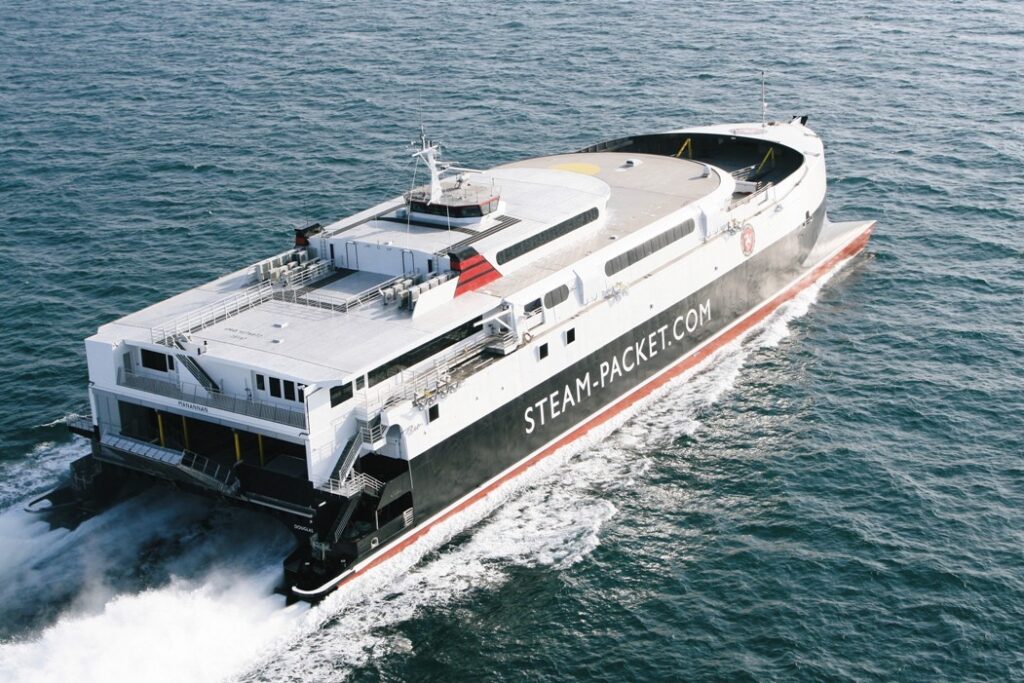
The company’s flagship vessel, the “Manannan,” exemplifies the modern fast ferry approach to island connections. This 96-metre wave-piercing catamaran, introduced to the route in 2009, can transport 850 passengers and 200 cars at speeds of up to 40 knots (74 km/h), cutting journey times between Douglas and Liverpool to approximately 2.5 hours. The vessel’s aluminium construction and four powerful water jets enable this remarkable speed, though at the cost of greater fuel consumption and occasional service disruptions during adverse weather.
For conventional services and winter operations, the Steam Packet Company operates the “Ben-my-Chree” (meaning “Woman of my Heart” in Manx Gaelic), a 125-metre monohull ro-ro vessel with capacity for 630 passengers and 275 cars. Introduced in 1998, this more traditional ferry offers greater reliability in challenging weather conditions and provides overnight capacity through 45 cabins, albeit at slower crossing speeds of approximately 19.5 knots (36 km/h).
When comparing these vessels to the largest whales visiting Manx waters, interesting scale relationships emerge. Minke whales, the most commonly sighted large cetacean around the Isle of Man, typically measure 7-8.5 metres in length—meaning that approximately 11-14 minke whales placed end-to-end would equal the length of the “Ben-my-Chree.” Occasionally, fin whales are spotted in deeper waters off the Isle of Man; an average 20-metre fin whale would span approximately one-sixth of the ferry’s total length.
Scottish ferry services present an even more complex network, with vessels ranging from small inter-island craft to substantial ships connecting the mainland with the major island groups. Caledonian MacBrayne (CalMac), established in 1851 and now operating as a publicly-owned company, provides the majority of these services, with a fleet of 33 vessels serving 50 ports and 29 routes across western Scotland’s intricate coastline.
The largest vessel in the CalMac fleet, the MV “Loch Seaforth,” entered service in 2015 on the Ullapool to Stornoway route connecting the mainland with Lewis and Harris in the Outer Hebrides. Measuring 116 metres in length with capacity for 700 passengers and 143 cars (or 20 commercial vehicles), this vessel represents the current pinnacle of Scottish island ferry design. Her journey time of 2 hours 45 minutes across the often-challenging Minch strait offers an essential lifeline for island communities.
For the Northern Isles of Orkney and Shetland, Serco NorthLink Ferries operates larger vessels over longer distances. The MV “Hjaltland” and her sister ship MV “Hrossey,” each 125 metres in length, connect Aberdeen with Kirkwall (Orkney) and Lerwick (Shetland) on overnight passages. These substantial vessels, with capacity for 600 passengers and 160 cars, plus significant freight capability, must contend with some of the roughest seas in British waters, particularly during winter crossings of the often-turbulent Pentland Firth.
The waters surrounding Scotland’s islands host some of Britain’s richest cetacean habitats, making them prime locations for whale watching activities that often operate alongside ferry routes. The Hebrides support remarkable marine biodiversity, with minke whales being the most commonly encountered large cetacean, particularly during summer months. Killer whales (orcas) regularly patrol these waters, while humpback whales are increasingly seen during seasonal migrations.
The size comparison between Scottish ferries and resident whale species offers instructive contrasts. The MV “Loch Seaforth,” at 116 metres, exceeds a typical adult minke whale (8 metres) by a factor of 14.5, while a humpback whale at 16 metres would measure approximately one-seventh of the ferry’s length. Occasionally, fin whales are spotted in deeper waters off western Scotland; at 20-22 metres, these animals would span roughly one-fifth of the ferry’s total length.
What distinguishes island ferries from their larger cross-Channel and North Sea counterparts is not merely size but operational capability in challenging conditions. These vessels must navigate often-restricted approaches to small harbours, maintain reliable schedules despite frequently adverse weather, and meet the diverse needs of island communities for passenger transport, vehicle carriage, and freight services—all while achieving economic viability on routes with highly seasonal demand patterns.
The technical specifications of these vessels reflect these demanding operational requirements. Hull forms typically feature deeper drafts than equivalent-sized cross-Channel vessels, with more pronounced bow sections designed to handle the larger waves encountered in exposed island approaches. Stabilization systems are particularly important, with active fin stabilizers, anti-roll tanks, and sophisticated ballast management systems employed to maintain passenger comfort in challenging sea states.
Propulsion arrangements on modern island ferries increasingly feature azimuthing thrusters—podded propulsion units that can rotate 360 degrees—providing enhanced maneuverability for port approaches and greater redundancy in case of mechanical issues. The MV “Loch Seaforth,” for example, employs diesel-electric propulsion driving two azimuth thrusters, supplemented by two bow thrusters for precise control during docking maneuvers.
The internal layout of these vessels prioritizes practical functionality while offering reasonable comfort for passengers on generally shorter crossings than overnight North Sea routes. Vehicle decks typically occupy the lower sections, with passenger areas concentrated on one or two upper decks featuring basic food service, retail outlets, and seating areas. Overnight vessels serving longer routes, such as those to Orkney and Shetland, include cabin accommodation ranging from basic four-berth rooms to premium offerings.
The environmental footprint of island ferry operations presents particular challenges, especially as these vessels often traverse ecologically sensitive marine habitats. Fuel consumption varies widely depending on vessel design, with conventional monohull ferries generally consuming 1-1.5 tonnes of marine diesel per operational hour, while high-speed craft like the “Manannan” may use considerably more when operating at full speed.
Recent years have seen growing attention to these environmental concerns, with operators exploring various measures to reduce ecological impact. CalMac has introduced hybrid diesel-electric technology on several smaller vessels in its fleet, including the MV “Lochinvar” and MV “Hallaig” serving short-distance routes. These vessels utilize battery power for part of their operation, reducing emissions and fuel consumption while maintaining essential services.
The acoustic impact of ferry operations in island waters represents another area of environmental significance. The underwater noise generated by vessels potentially interferes with the communication and navigation systems of resident and migratory cetaceans. This concern has led to operational adjustments in some areas, including reduced speeds in known whale feeding grounds and modified routing to avoid marine protected areas during sensitive periods.
For passengers travelling aboard these island ferries, the experience differs markedly from longer cross-Channel or North Sea crossings. Journey times typically range from 30 minutes for shorter inter-island hops to 7-8 hours for the longest services to the Northern Isles. The vessels generally offer more modest amenities but compensate with spectacular scenery and wildlife-viewing opportunities that have made some routes tourist attractions in their own right.
Several Scottish ferry operators now include wildlife observation programmes, with dedicated viewing areas and occasional naturalist guides to enhance the passenger experience. The Ullapool-Stornoway route across the Minch is particularly noted for cetacean sightings, with minke whales and dolphins frequently observed during summer months. For many visitors, these wildlife encounters represent a highlight of their island journey, adding value beyond mere transportation.
The future of island ferry design in British waters points toward continued innovation in vessel efficiency, environmental performance, and passenger experience. Several operators are exploring alternative propulsion technologies, with fully-electric systems already viable for the shortest routes and hydrogen power under consideration for medium-distance services.
The Scottish Government’s Ferries Plan includes provisions for vessel replacement programmes that will gradually introduce more environmentally sustainable ships across the network. These new vessels aim to reduce carbon emissions while maintaining or enhancing the essential connectivity upon which island communities depend. Similar initiatives are under consideration for the Isle of Man’s future fleet renewal.
As we consider the parallel existence of these specialised ferry vessels and their cetacean neighbours in island waters, several themes emerge. Both entities have adapted to challenging maritime environments—the whales through millions of years of evolution, the ferries through decades of design refinement. Both play essential roles in their respective ecosystems: whales as apex predators and key components of marine food webs, ferries as lifelines connecting human communities across water barriers.
The scale relationship between island-serving ferries and resident whale species offers perhaps the most balanced comparison in our exploration. While still substantially larger than even the largest cetaceans they might encounter, these ferries exist on a more comparable dimensional scale than the massive superferries of cross-Channel and North Sea routes. A large ferry like the “Ben-my-Chree” exceeds a fin whale’s length by a factor of six—substantial but not as extreme as the factor of twelve seen with North Sea superferries.
This closer proportional relationship perhaps explains the greater attention to cetacean conservation often observed in island ferry operations. When whales represent a more visibly significant presence relative to vessel size, their protection assumes greater prominence in operational planning and passenger awareness. Many island ferry crews maintain detailed wildlife logs, contributing valuable data to conservation research while enhancing the journey experience for passengers.
The island ferries of the Isle of Man and Scottish waters represent a distinctive category in our exploration of comparative dimensions. Neither as massive as the cross-Channel and North Sea giants nor as intimately scaled as local harbour craft, these vessels occupy a middle ground that perfectly suits their operational requirements. In their balance of size, capability, and environmental integration, they perhaps offer the most harmonious example of human maritime technology coexisting with the cetacean inhabitants of British waters.
Sperm Whales: The Deep Divers
Among the great whales occasionally encountered in British waters, the sperm whale (Physeter macrocephalus) stands apart as both an anatomical and behavioural outlier. As the largest of the toothed whales and the most prodigious diver among all cetaceans, this remarkable species represents a fascinating study in evolutionary specialization. Though less frequently sighted than some baleen whales around the British Isles, their occasional presence—particularly in deeper waters west of Scotland and Ireland—adds another dimension to our exploration of comparative scale between marine mammals and maritime vessels.
The sperm whale’s dimensions place it firmly among the largest animals on Earth, though noticeably smaller than the blue and fin whales discussed in previous chapters. Adult males typically reach 16-18 metres in length, with exceptional individuals recorded at up to 20 metres. Their mass ranges from 35-45 tonnes, with the largest bulls potentially exceeding 50 tonnes. Females are substantially smaller, rarely exceeding 12 metres in length or 15 tonnes in weight—one of the most pronounced sexual dimorphisms among cetaceans.
What truly distinguishes the sperm whale is not its overall size but its extraordinary anatomical proportions. The massive head, comprising roughly one-third of total body length, houses the largest brain of any animal (averaging 8 kilograms) and the enormous spermaceti organ—a unique structure filled with up to 1,900 litres of waxy spermaceti oil that likely serves multiple functions related to buoyancy control, echolocation, and potentially stunning prey through acoustic mechanisms.
This disproportionately large head gives sperm whales their unmistakable profile, resembling a giant floating log when at rest on the surface. Their skin is typically wrinkled and dark grey to brown in coloration, with a distinctive triangular dorsal fin positioned far back on the body. Unlike the symmetrical bodies of baleen whales, sperm whales display notable asymmetry, with the blowhole positioned to the left of the midline, creating a distinctive forward-angled blow that allows experienced observers to identify them from considerable distances.
In British waters, sperm whales primarily inhabit deeper offshore areas beyond the continental shelf, particularly the Rockall Trough and Faroe-Shetland Channel where depths exceed 1,000 metres. They occasionally approach coastal waters, particularly around northern Scotland and western Ireland, though such visits sometimes end in stranding events when the animals venture into unfamiliar shallow environments.
The feeding behaviour of sperm whales represents perhaps their most remarkable specialization. Unlike the filter-feeding baleen whales, sperm whales are active predators focusing primarily on deep-water squid, particularly medium to large specimens including the mysterious giant and colossal squid species. They supplement this diet with various fish species and occasionally benthic organisms taken from the seafloor.
To secure this deep-water prey, sperm whales have evolved the most extreme diving capabilities among all air-breathing vertebrates. Routine foraging dives reach depths of 600-1,200 metres and last 30-60 minutes, while exceptional dives have been recorded exceeding 2,000 metres and 90 minutes’ duration. This remarkable diving ability derives from multiple physiological adaptations, including enhanced oxygen storage in blood and muscle tissues, selective blood shunting to maintain critical organ function, and the collapse of air-filled spaces to prevent pressure damage.
During these profound dives, sperm whales navigate and locate prey using the animal kingdom’s most powerful biological sonar system. Their unique anatomy, particularly the spermaceti organ and associated structures, generates and focuses intense sound pulses—the loudest sounds produced by any living creature, reaching 230 decibels. These clicks bounce off potential prey items and return to the whale, allowing precise targeting even in the absolute darkness of the deep ocean.
When comparing sperm whales to ferries operating in British waters, several intriguing parallels emerge. The Stena Line vessel “Stena Superfast VII,” operating between Belfast and Cairnryan, measures 203 metres in length—approximately 11 times longer than an average adult male sperm whale. However, the ferry’s beam (width) of 25 metres is closer to the whale’s length, offering a more tangible sense of the animal’s scale.
The P&O Ferries vessel “European Causeway,” operating between Cairnryan and Larne, presents another useful comparison. At 123 metres in length and 19.5 metres in beam, this short-sea ferry would accommodate approximately seven sperm whales placed end-to-end along its length. In mass terms, the ferry’s 20,646 gross tonnage significantly exceeds the sperm whale’s 40-50 tonne weight, though this comparison involves different measurement systems.
What makes the sperm whale particularly remarkable in comparison to human vessels is its diving capability. While naval submarines routinely operate at depths exceeding those reached by sperm whales, no surface vessel approaches their diving performance. The hulls of conventional ferries are designed to remain at the surface, with structural integrity that would fail catastrophically under the immense pressures encountered at the depths routinely navigated by sperm whales.
From an engineering perspective, the sperm whale’s pressure resistance represents a marvel of biological design. Whereas submarines require thick steel hulls and complex pressure management systems to operate at depth, the sperm whale’s body naturally withstands pressures exceeding 200 atmospheres (20 MPa) during the deepest dives—equivalent to balancing approximately 2,000 tonnes on a square metre. This capability derives from evolutionary adaptations including collapsible rib cages, flexible organ systems, and specialized circulatory arrangements that would be impossible to replicate through conventional engineering.
The sperm whale’s efficient locomotion system provides another contrast with maritime vessels. Despite their somewhat ungainly appearance compared to more streamlined whale species, sperm whales maintain remarkable efficiency during their deep diving cycles. They typically descend at speeds of 3-4 kilometres per hour, using minimal energy by adjusting buoyancy through mechanisms including the compression of air spaces and potentially the manipulation of spermaceti oil temperature and density.
By contrast, even the most advanced human vessels require enormous energy input to maintain movement. A typical ferry consumes 1-2 tonnes of fuel per operational hour, converting chemical energy to mechanical propulsion with efficiency far below that achieved by the sperm whale’s muscular fluked tail. The whale accomplishes its remarkable diving feats using only the energy derived from prey consumed during previous foraging—a closed ecological cycle impossible for human-engineered vessels.
The acoustic signatures of these two ocean entities differ dramatically as well. The sperm whale’s vocalizations represent the most powerful biological sound source on Earth, with click trains audible through specialized equipment from distances exceeding 10 kilometres. These sounds serve multiple functions, from prey location to complex social communication between individuals and families.
Ferry vessels, meanwhile, generate underwater noise primarily as an incidental byproduct of their operation. Engine vibrations, propeller cavitation, and hull movement create a complex acoustic signature that can travel considerable distances underwater—potentially interfering with cetacean communication and navigation. Recent studies suggest that shipping noise may disrupt the normal acoustic environment upon which deep-diving species like sperm whales depend for vital functions.
The sperm whale’s social structure presents another fascinating contrast with the operational patterns of ferry services. While ferries maintain rigid schedules with multiple daily crossings on fixed routes, sperm whales follow complex, flexible movement patterns dictated by prey distribution, reproductive cycles, and social dynamics. Female sperm whales and their young form stable matrilineal units that may remain associated for decades, while adult males lead more solitary existences, joining female groups temporarily during breeding seasons.
Historically, sperm whales were heavily targeted by commercial whaling operations, with British vessels playing a significant role in this exploitation. The animal’s valuable spermaceti oil, high-quality blubber, and ambergris (a rare intestinal secretion used in perfumery) made it particularly lucrative for whalers. British whaling ships from ports including Whitby, Hull, and Scottish harbours pursued sperm whales across global oceans from the late 18th century until the decline of commercial whaling in the mid-20th century.
Current global population estimates suggest approximately 300,000-450,000 sperm whales remain worldwide, with perhaps 15,000-20,000 in the North Atlantic. While this represents a significant recovery from the estimated 70% depletion caused by commercial whaling, numbers remain far below pre-exploitation levels. The species is classified as “vulnerable” on the IUCN Red List, with Northeast Atlantic populations facing ongoing challenges from human activities.
For ferry passengers travelling routes that might cross sperm whale habitat—particularly services to the Northern Isles or western Scotland—the possibility of sighting these magnificent animals remains remote but tantalizing. Their distinctive angled blow and log-like appearance when resting between diving bouts make them unmistakable even to novice observers. However, their offshore distribution and extended deep diving patterns (spending approximately 80% of their lives below the surface) mean that direct encounters with ferries remain relatively uncommon.
The relationship between sperm whales and ferry operations presents unique considerations. Ship strikes are less frequent than with more surface-oriented species, though the whales’ extended surface recovery periods following deep dives create windows of vulnerability. Acoustic interference potentially represents a more significant concern, particularly if ferry routes overlay important foraging habitats where communication and echolocation are critical to the whales’ survival.
Conservation initiatives increasingly address these concerns through various measures, including the establishment of marine protected areas in key habitats and the development of ship quieting technologies to reduce underwater noise. The designation of the Faroe-Shetland Channel as a Marine Protected Area in Scottish waters offers some protection for sperm whale habitat, though challenges remain in balancing human maritime activities with cetacean conservation needs.
As we contemplate the parallel existence of these two oceanic entities—the ferry as a surface-dwelling connector of human communities, the sperm whale as a deep-ocean specialist rarely glimpsed by human eyes—the contrast in their evolutionary histories becomes particularly apparent. The modern ferry represents a technological solution to maritime transport needs developed over mere centuries, while the sperm whale embodies millions of years of evolutionary refinement resulting in the most accomplished deep-diving mammal on Earth.
This specialized adaptation to the deep ocean environment—so different from human maritime activity concentrated at the surface—allows sperm whales to exploit ecological niches unreachable by other large predators. Their ability to access food resources in the lightless depths beyond 1,000 metres gives them a competitive advantage that has sustained their species for millions of years despite human exploitation.
The sperm whale, though less frequently encountered in ferry lanes than some other cetacean species, reminds us that beneath the familiar shipping routes of British waters lies a vertical dimension of oceanic habitat largely invisible to human observation but teeming with life and activity. In this mysterious realm of the deep, these remarkable animals pursue an existence almost entirely separate from the surface world traversed by ferries—a parallel marine universe that occasionally intersects with our own when these deep-diving giants briefly surface for breath before returning to their preferred abyssal domain.
The Engineering Behind Modern Ferry Design
The development of modern ferries operating in British waters represents a triumph of marine engineering, balancing complex technical requirements with commercial viability, passenger expectations, and increasingly stringent environmental regulations. Unlike the evolutionary process that shaped the whales explored in previous chapters, ferry design reflects conscious human decision-making responding to specific operational challenges. Understanding the engineering principles behind these vessels provides essential context for our comparative exploration of whales and ships sharing the same waters.
Modern ferry design begins with the fundamental question of hull form—the three-dimensional shape of the vessel’s underwater body that determines its movement through water. Naval architects must balance multiple competing priorities: stability in challenging sea conditions, fuel efficiency, internal volume for vehicles and passengers, maneuverability in restricted port approaches, and compatibility with existing port infrastructure.
For the major vessels operating in British waters, several distinct hull configurations predominate. Conventional monohull designs remain most common, particularly for longer routes with greater exposure to challenging weather conditions. These traditional single-hull vessels typically feature relatively deep drafts of 5-7 metres and pronounced bow sections capable of handling large waves. The P&O Ferries “Spirit of Britain” exemplifies this approach, with its 213-metre conventional monohull providing excellent seakeeping in the often-challenging conditions of the English Channel.
For shorter routes or operations prioritizing speed over heavy-weather capability, catamaran designs have gained significant popularity. These twin-hulled vessels offer several advantages, including reduced water resistance, greater stability in moderate conditions, and larger deck space relative to length. The Isle of Man Steam Packet Company’s “Manannan,” a 96-metre wave-piercing catamaran, demonstrates this approach, achieving speeds of 40 knots (74 km/h) compared to the 22-24 knots typical of conventional monohulls.
Less common but increasingly significant are trimaran designs featuring three parallel hulls. Condor Ferries’ “Condor Liberation,” operating between southern England and the Channel Islands, represents one of the few trimaran ferries in British service. This 102-metre vessel combines the speed advantages of multihull design with improved stability characteristics, though at the cost of reduced internal volume compared to monohulls of equivalent length.
The size of modern ferries reflects careful optimization for their specific routes and market requirements. Vessels operating longer North Sea crossings such as the Stena Line “Hollandica” (240 metres) require greater passenger amenities and cabin accommodation for overnight journeys, while shorter routes may emphasize vehicle capacity and quick turnaround times over passenger comfort. The scale of these vessels has increased progressively as operators seek economies of scale, with the largest current ferries in British waters approaching cruise ships in their dimensions.
Propulsion systems represent another critical engineering decision in ferry design. Contemporary vessels typically employ one of several approaches, each offering different advantages. Conventional direct-drive diesel systems, where large medium-speed diesel engines connect directly to propeller shafts, remain common for their relative simplicity and reliability. The P&O “Spirit of Britain” employs four Wärtsilä 12V46 diesel engines, each generating 12,600 kW, directly driving two controllable-pitch propellers.
Increasingly popular are diesel-electric arrangements, where diesel generators produce electricity that powers electric motors connected to the propulsion system. This approach offers greater flexibility in engine placement, improved redundancy, and potentially better fuel efficiency, particularly at varying operational speeds. The Stena “Hollandica” uses this system, with four Wärtsilä 8L46 diesel generators providing power to electric propulsion motors.
For high-speed craft, water jet propulsion has become standard, using powerful pumps to draw water through intakes and expel it at high velocity through steering nozzles. The “Manannan” employs four Rolls-Royce Kamewa 125 SII water jets, each driven by a 7,000 kW diesel engine, enabling its impressive 40-knot service speed while providing excellent maneuverability through vectored thrust.
The structural engineering of ferries must account for multiple challenges beyond those faced by most commercial vessels. The large, unobstructed vehicle decks required for roll-on/roll-off operation create particular stresses on the hull structure, requiring sophisticated finite element analysis during design to ensure sufficient strength. Additionally, the asymmetrical loading patterns typical when vehicles are partially loaded necessitate robust ballast systems to maintain proper trim and stability.
Safety systems receive particular attention in ferry design following historical incidents such as the Herald of Free Enterprise disaster in 1987, which led to fundamental changes in maritime safety regulations. Modern vessels incorporate multiple watertight compartments, sophisticated damage control systems, advanced fire suppression equipment, and comprehensive evacuation facilities including marine evacuation systems (MES) that can rapidly deploy inflatable slides and life rafts.
Stability characteristics remain paramount in ferry design, with vessels required to meet stringent international standards for intact and damaged stability. The Stockholm Agreement, implemented following the Estonia disaster in 1994, introduced particularly demanding requirements for ferries operating in European waters, specifying minimum stability criteria even with significant water on vehicle decks—a “water on deck” standard substantially exceeding previous requirements.
The passenger spaces on modern ferries represent another engineering challenge, balancing comfort, capacity, and commercial viability. Shorter-route ferries typically feature extensive lounge seating, basic food and beverage outlets, and limited retail facilities, while longer North Sea and Irish Sea routes incorporate full-service restaurants, entertainment venues, and cabin accommodation ranging from basic shared facilities to premium suites.
Environmental engineering aspects have assumed increasing prominence in recent ferry design, driven by both regulatory requirements and commercial considerations. The establishment of Emission Control Areas in the North Sea and English Channel has necessitated either the installation of exhaust gas cleaning systems (scrubbers) or conversion to lower-sulphur fuels for most major vessels. The P&O “Spirit of Britain” and its sister ship received extensive scrubber installations during recent refits to comply with these regulations while continuing to use conventional marine fuel.
More radical environmental innovations are appearing in newer vessels, particularly those serving shorter routes. The Caledonian MacBrayne ferries “Hallaig” and “Lochinvar,” operating on short Scottish routes, feature hybrid diesel-electric propulsion with battery systems that significantly reduce emissions and fuel consumption. Future developments point toward hydrogen fuel cells and fully electric propulsion for short-distance vessels, though technological limitations currently restrict these applications to smaller ferries and shorter routes.
When comparing the engineering of modern ferries with the natural design of the whales discussed in previous chapters, several fascinating contrasts emerge. Perhaps most striking is the difference in energy efficiency—whales achieve remarkable performance through biological systems refined over millions of years, while human vessels require enormous energy input for equivalent capabilities.
A blue whale, for instance, propels its 200-tonne mass through water with muscular power derived entirely from the food it consumes—primarily tiny krill converted with extraordinary efficiency into locomotive energy. A ferry of roughly equivalent mass (though most are substantially heavier) requires continuous input of fossil fuels, consuming 1-2 tonnes of diesel per operational hour.
Hydrodynamic efficiency represents another area where biological design currently exceeds human engineering. The whale’s flexible body, compliant skin texture, and ability to actively modify its shape during movement create flow characteristics that minimize drag to an extent impossible with rigid-hulled vessels. Recent biomimetic research has attempted to incorporate whale-inspired features into hull design, including tubercles modeled on humpback whale flippers to improve hydrodynamic performance, though these remain experimental rather than mainstream applications.
Maneuverability comparisons also favor the biological model, with whales capable of complex three-dimensional movements impossible for surface vessels. A humpback whale can execute precise turns, rolls, and vertical movements despite its massive size—capabilities that would require multiple thrusters, stabilizers, and control surfaces on a vessel of comparable dimensions. Even the most sophisticated azimuthing propulsion systems on modern ferries cannot replicate this natural agility.
The longevity comparison presents another interesting contrast. Modern ferries typically operate for 25-30 years before economic obsolescence necessitates replacement, though the hull structure itself might remain serviceable for longer periods. Great whales routinely live 50-90 years in the wild, with continuous self-maintenance and repair throughout their lifespan—a capability no human-engineered structure can match.
Environmental impact perhaps represents the starkest contrast between these two categories of ocean giants. Whales function as integral components of marine ecosystems, with their presence typically enhancing rather than degrading environmental quality. Their bodies even serve ecological functions after death, providing nutrient pulses to deep-sea communities as “whale falls.” Ferries, despite ongoing improvements in environmental performance, remain sources of emissions, underwater noise, and potential chemical contamination.
Yet despite these contrasts, certain convergent solutions appear in both ferry design and whale evolution, representing optimal approaches to common challenges. Both employ streamlined forms to reduce drag, though achieved through different mechanisms. Both have evolved strategies for efficient propulsion through water, with propellers and fluked tails representing parallel solutions to generating forward thrust. Both incorporate sophisticated sensory systems for navigating complex marine environments, though using different technologies—electronic systems for ferries, biological sonar and other senses for whales.
The future of ferry design in British waters points toward continued innovation, potentially narrowing some of these performance gaps through biomimetic approaches. Several experimental hull designs explicitly draw inspiration from cetacean morphology, incorporating more flexible materials, variable geometry surfaces, and flow control systems mimicking biological structures. Propulsion systems increasingly utilize features found in marine animals, including variable-pitch blades inspired by the movement patterns of flukes and flippers.
As these engineered vessels and their biological counterparts continue sharing British waters, the engineering dialogue between them grows increasingly sophisticated. Conservation biologists provide naval architects with detailed analyses of cetacean hydrodynamics, while engineering advances in noise reduction and emission control benefit whale populations by reducing anthropogenic impacts on their environment.
This technological-biological interface represents one of the most fascinating aspects of our comparative exploration. The ferry—product of human engineering limited by materials science, economic constraints, and relatively brief developmental history—continues evolving toward greater efficiency and reduced environmental impact. Meanwhile, the whale—product of natural selection operating over millions of years with organic materials—remains the benchmark against which our maritime engineering achievements must be measured.
In this ongoing dialogue between natural and human design, we find perhaps the most promising avenue for future maritime development—an approach that draws inspiration from the remarkable adaptations of cetaceans while applying human technological capability to create vessels that serve human needs with minimal environmental consequence. The future ferry, incorporating lessons from whales sharing its waters, might blend the best of both evolutionary paths to achieve a harmony of form and function currently unmatched by either path alone.
Minke Whales: The Most Common British Whales
The minke whale (Balaenoptera acutorostrata) stands as the most frequently encountered large cetacean in British waters, representing a perfect subject for our comparative exploration of whales and vessels. Despite being the smallest of the baleen whales regularly found around the British Isles, these remarkable animals still reach impressive dimensions while displaying distinctive behaviours that make them particularly visible to ferry passengers. Their relatively common presence in coastal waters brings them into frequent proximity with maritime traffic, creating both opportunities for observation and challenges for conservation.
Adult minke whales typically measure 7-8.5 metres in length, with females slightly larger than males. Their weight ranges from 5-10 tonnes, placing them firmly at the smaller end of the baleen whale spectrum but still substantially larger than most odontocetes (toothed whales). This relatively modest size—for a baleen whale—combined with their distinctive appearance makes them readily identifiable even by novice observers when they surface near vessels.
The minke whale’s physical appearance features several distinctive characteristics that aid identification. Their body is sleek and streamlined, dark grey to black on the upper surfaces with lighter, often white, undersides. Perhaps most distinctive is the sharp, pointed snout and the prominent white bands on the pectoral fins—a feature unique among rorqual whales. The dorsal fin, positioned in the rear third of the body, is relatively tall and falcate (sickle-shaped), becoming visible soon after the animal surfaces.
In British waters, minke whales display a remarkably broad distribution, frequenting both coastal areas and offshore waters around the entire coastline. Particular concentrations occur in the Hebrides, especially around the Small Isles and Minch, the Moray Firth, waters east of the Northern Isles, and seasonally in the southern North Sea and western English Channel. This wide-ranging distribution brings them into regular contact with ferry routes throughout British waters, from the Pentland Firth services to the Northern Isles to cross-Channel routes between England and France.
The seasonal patterns of minke whale presence in British waters follow prey availability, with peak numbers typically observed between May and October. During summer months, coastal waters around Scotland may host several hundred individuals, while winter typically sees most animals moving to more offshore or southern waters, though some remain year-round in certain areas.
The feeding behaviour of minke whales offers particularly good opportunities for observation from vessels. Unlike larger baleen whales that execute dramatic feeding lunges, minke whales typically employ more subtle “gulp feeding” techniques, rapidly surfacing through prey concentrations with mouth agape. They feed primarily on small schooling fish including sandeel, herring, and sprat, as well as various crustaceans. This diet reflects their ecological niche as relatively shallow divers, typically remaining in the upper 200 metres of the water column.
A distinctive feeding behaviour occasionally observed in British waters is “lunge-rolling,” where the whale rolls onto its side or back while lunging through a prey concentration. This behaviour sometimes exposes the white underside and pectoral fins, creating a flash of white visible from considerable distances. Minke whales also occasionally engage in “bird-association feeding,” where they target the same prey aggregations that attract feeding seabirds, creating visible feeding assemblages that may persist for hours in productive areas.
When comparing minke whales to ferries operating in British waters, the scale difference becomes particularly apparent. The Pentland Ferries vessel “Alfred,” operating between the Scottish mainland and Orkney, measures 85 metres in length—approximately ten times longer than an average minke whale. However, the ferry’s beam (width) of 16 metres is twice the whale’s length, offering a tangible sense of the animal’s scale.
The Caledonian MacBrayne vessel “Isle of Lewis,” operating between Ullapool and Stornoway, presents another instructive comparison. At 101 metres in length and 19 metres in beam, this Hebridean ferry would accommodate approximately 12 minke whales placed end-to-end along its length. In mass terms, the ferry’s 6,753 gross tonnage significantly exceeds the minke whale’s 5-10 tonne weight, though this comparison involves different measurement systems.
What makes the minke whale particularly interesting in comparison to ferries is their similar operational environment—both typically remain in relatively shallow continental shelf waters rather than venturing into the oceanic depths preferred by larger whale species. This shared habitat increases the likelihood of encounters between minke whales and ferry vessels, particularly on routes traversing known feeding hotspots such as the Minch in western Scotland.
From a biomechanical perspective, the minke whale represents one of the most energetic rorqual species, capable of rapid acceleration and relatively high sustained speeds of 20-30 km/h, with bursts of up to 38 km/h recorded. This performance derives from their streamlined form and powerful musculature, allowing them to outpace potential predators (primarily killer whales) despite their relatively small size among baleen whales.
The acoustic world of minke whales includes various vocalizations, from low-frequency “pulse trains” and “downsweeps” to more complex “star wars” calls (named for their resemblance to fictional spacecraft sounds in the popular films). These sounds likely serve both communication and potentially navigational functions, though the species lacks the complex songs of humpback whales or the powerful clicks of sperm whales.
The minke whale’s life history contrasts with ferry operational timelines in interesting ways. While ferries typically operate for 25-30 years before replacement, minke whales routinely live 30-50 years in the wild, with some individuals potentially reaching 60 years. During this extended lifetime, they may travel tens of thousands of kilometres, though their movements appear less extensive than the transoceanic migrations undertaken by larger whale species.
Historically, minke whales were targeted less intensively by commercial whalers than larger species, primarily because their smaller size yielded less oil and baleen per animal, making them economically less attractive. However, as larger whale populations declined, commercial operations increasingly shifted focus to minke whales, particularly in the North Atlantic. Norwegian and Icelandic operations continue limited commercial hunts today, though not in British waters, which have been a whale sanctuary since 1981.
Current population estimates suggest approximately 180,000-200,000 minke whales worldwide, with the North Atlantic population numbering 30,000-60,000 individuals. British waters might host 1,000-2,000 animals during peak summer months, representing one of the more significant concentrations in European waters. The species is classified as “Least Concern” on the IUCN Red List, reflecting its relatively healthy population status compared to other great whales.
For ferry passengers, minke whales offer the most likely opportunity to observe a large cetacean during crossings in British waters. Their relatively small size and subtle surfacing pattern—typically showing just the dorsal fin and a small portion of the back without a visible blow—makes spotting them somewhat challenging, but their frequent occurrence near established ferry routes creates regular sighting opportunities during summer months.
Several ferry operators now capitalize on this wildlife watching potential, with companies including Caledonian MacBrayne and NorthLink Ferries offering wildlife guides or information packs highlighting potential cetacean sightings. The Ullapool-Stornoway and Aberdeen-Orkney-Shetland routes are particularly noted for minke whale encounters, with dedicated viewing areas established on some vessels.
The relationship between minke whales and ferry operations presents both opportunities and challenges. While ferries provide platforms for public observation and appreciation of these animals, potentially building support for conservation efforts, they also present potential risks through ship strikes, underwater noise, and habitat disruption. Minke whales appear more vulnerable to ship strikes than some larger species due to their smaller size and tendency to surface unpredictably near vessels.
Various mitigation measures have been implemented to reduce negative interactions, including vessel speed restrictions in sensitive areas, the establishment of dedicated shipping lanes that avoid known feeding hotspots, and training programmes for navigation officers to improve whale detection and avoidance. The relatively small size of minke whales compared to vessels makes visual detection challenging, particularly in poor weather or reduced visibility.
Research initiatives increasingly monitor interactions between minke whales and maritime traffic, with technologies including passive acoustic monitoring, satellite tracking, and environmental DNA sampling providing new insights into how these animals respond to vessel presence. Early evidence suggests minke whales may alter swimming patterns, dive profiles, and vocal behaviour when vessels approach, though responses vary by individual and context.
Conservation efforts focusing on minke whales in British waters include the establishment of various Marine Protected Areas encompassing known feeding grounds, particularly in western Scotland. The Sea of Hebrides Marine Protected Area, designated in 2020, specifically identifies minke whales as a priority feature, implementing management measures to reduce disturbance in this globally significant habitat.
As we contemplate the future relationship between minke whales and ferry operations in British waters, several trends emerge. Growing public interest in marine wildlife observation creates opportunities for “ferry-based science,” with passengers contributing valuable sighting data through citizen science initiatives. Smartphone applications now allow real-time reporting of cetacean sightings from ferries, creating an extensive observer network across regular routes.
Technological advances in quieter propulsion systems, hull designs that reduce underwater noise, and improved detection systems for marine mammals all offer potential benefits for minke whale conservation while maintaining essential ferry services. The development of hybrid and electric propulsion for smaller vessels serving island communities represents a particularly promising development for reducing acoustic impacts in sensitive habitats.
The minke whale, though the smallest of the great whales in British waters, offers perhaps the most accessible connection between ferry passengers and the cetacean world. Their relatively common presence along established routes creates regular opportunities for observation and appreciation, potentially fostering public support for broader marine conservation initiatives. In their modest dimensions but remarkable capabilities, these animals represent perfect ambassadors for the underwater world over which millions of ferry passengers travel annually.
As we continue our exploration of the relative dimensions of whales and ferries sharing British waters, the minke whale stands as the most frequently encountered example of this coexistence—a living link between the worlds above and below the waves, connecting ferry passengers with the remarkable diversity of marine life surrounding the British Isles.
Coastal Encounters: When Whales Meet Ships
The waters surrounding the British Isles represent one of the world’s busiest maritime corridors, with approximately 95,000 ship movements annually through the English Channel alone. Concurrently, these same waters host significant populations of cetaceans, from the relatively common harbour porpoise and minke whale to occasional visits from blue, fin, and sperm whales. This spatial overlap creates a fascinating yet sometimes problematic intersection between two worlds—one of engineered vessels following prescribed routes and schedules, the other of wild marine mammals pursuing ancient patterns of migration and feeding.
The nature of encounters between whales and ferries in British waters varies dramatically depending on location, season, and species involved. In certain hotspots, such as the Sea of Hebrides or the Minch in western Scotland, summer encounters with minke whales occur almost daily, with vessels occasionally altering course slightly to provide passengers with better viewing opportunities. These planned encounters, managed within strict wildlife watching guidelines, represent positive interactions that enhance passenger experience while promoting conservation awareness.
More concerning are unplanned close encounters, particularly in busy shipping lanes where neither whale nor vessel has sufficient time or space to alter course. The English Channel, with its narrow confines and intense maritime traffic, presents particular challenges, as does the northern North Sea where oil and gas industry support vessels operate alongside ferry services in waters frequented by various whale species.
Ship strikes—direct collisions between vessels and cetaceans—represent the most severe negative interaction. While comprehensive data remains elusive due to under-reporting, evidence suggests that approximately 10-20 significant strikes occur annually in waters around the British Isles, with ferries involved in perhaps 3-5 incidents. Most documented cases involve faster vessels, particularly high-speed ferries operating at speeds exceeding 25 knots, though conventional vessels can also cause fatal injuries.
The physical mechanics of ship strikes vary by vessel type. Conventional monohull ferries typically cause blunt trauma injuries through direct impact with the bow, potentially followed by propeller injuries if the animal is drawn into the propulsion system. High-speed catamarans and wave-piercing designs present different hazard profiles, with their sharp bow sections potentially causing severe cutting injuries. The relative size of vessel and whale dramatically influences outcomes; smaller cetaceans struck by large ferries rarely survive, while larger whale species occasionally sustain non-fatal injuries.
Behavioural factors influence strike risk significantly. Surface-active species such as humpback whales, which spend extended periods near the surface during breaching displays, face elevated risk compared to deep-diving species like sperm whales that remain submerged for longer periods. Similarly, feeding behaviours that reduce environmental awareness—such as the intense focus minke whales display when pursuing fish schools—may increase vulnerability to approaching vessels.
From the vessel perspective, detection capabilities represent a critical factor in avoiding collisions. Under optimal conditions of good visibility, calm seas, and attentive lookouts, large whales can be visually detected at distances of 500-1,000 metres, potentially allowing course adjustments for slower vessels. However, common conditions in British waters—including fog, heavy rain, rough seas, and limited daylight during winter months—dramatically reduce detection ranges, often to less than 100 metres. At typical ferry speeds of 15-20 knots, this provides minimal reaction time for course alterations.
Various technological solutions have emerged to address these detection limitations. Infrared camera systems can enhance whale detection in darkness or poor visibility by identifying temperature differentials between whale blows and surrounding water. Passive acoustic monitoring systems detect whale vocalizations, though their effectiveness varies by species, with vocally active species like sperm whales more readily detected than the relatively quiet minke whales. Active sonar systems remain controversial due to their potential to cause behavioural disturbance through introduced noise.
Beyond direct physical encounters, the acoustic interaction between ferries and whales represents another significant dimension of their relationship. Underwater noise generated by vessels creates an increasingly cluttered acoustic environment that potentially interferes with cetacean communication, navigation, and feeding activities. Ferry propulsion systems, particularly conventional propellers, generate broadband noise centered in frequency ranges that overlap with various whale vocalizations.
Sound propagation characteristics in shallow coastal waters, where most ferry operations occur, create complex acoustic environments with extensive reflections from the seabed and surface. These conditions can extend the effective range of vessel noise beyond the immediate vicinity of shipping lanes, potentially affecting whale behaviour in seemingly undisturbed areas. Recent research suggests some whale species alter vocalization patterns—changing call frequency, duration, or repetition rates—in response to vessel noise, representing potential communication impacts.
The spatial distribution of encounters between whales and ferries in British waters reveals interesting patterns. Certain routes consistently produce more frequent sightings, particularly those traversing productive feeding grounds or known migration corridors. The Caledonian MacBrayne routes through the Minch and Sea of Hebrides report cetacean sightings on approximately 80% of summer crossings, with minke whales being the most frequently observed large cetacean. The Northern Isles routes operated by NorthLink Ferries similarly report regular encounters, particularly during summer months.
Cross-Channel routes between southern England and France report fewer large whale sightings, though smaller cetaceans including harbour porpoise and various dolphin species occur regularly. The Irish Sea crossings, particularly between Holyhead and Dublin, occupy an intermediate position, with minke whale sightings reported several times monthly during summer but rarely during winter.
Seasonal patterns strongly influence encounter frequency, with peak sightings occurring during summer months (June-September) when whale populations in British waters reach their annual maximum. Winter crossings produce dramatically fewer sightings, reflecting both the reduced presence of migratory species and the challenging observation conditions of shorter daylight hours and generally poorer weather.
From a management perspective, various strategies have evolved to reduce negative interactions while promoting positive encounters. Vessel speed represents a critical factor, with research indicating that speeds below 10-12 knots dramatically reduce both collision probability and severity of injuries when strikes occur. Several voluntary speed restriction zones have been established in sensitive areas, particularly in western Scotland and around the Northern Isles, though compliance remains inconsistent.
Routing measures represent another management approach, with Traffic Separation Schemes and recommended routes designed to minimize overlap between vessel traffic and cetacean hotspots. The North Channel Traffic Separation Scheme between Scotland and Northern Ireland, for example, routes vessels away from areas with historically high minke whale concentrations during summer months. Similar measures exist in approaches to various major ports, though implementation specifically for cetacean protection remains limited compared to schemes addressing navigational safety.
Crew training initiatives increasingly incorporate cetacean identification and avoidance protocols, with dedicated lookout procedures implemented on routes with frequent whale encounters. Several major ferry operators serving Scottish routes have developed specific whale avoidance protocols, including reduced night-time speeds in known hotspots and enhanced lookout arrangements during peak seasons.
For passengers, whale encounters from ferries represent potentially transformative experiences that foster appreciation for marine conservation. Operators increasingly capitalize on this interest through wildlife observation programmes, with dedicated viewing areas, interpretive materials, and occasionally naturalist guides enhancing the experience. The educational value of these encounters extends beyond the immediate experience, potentially building broader public support for cetacean conservation initiatives.
Documentation of encounters has improved dramatically through citizen science initiatives, with smartphone applications allowing passengers to record sightings with GPS coordinates, photographs, and behavioural observations. Projects such as the Hebridean Whale and Dolphin Trust’s “Whale Track” app have collected thousands of sightings from ferry passengers, contributing valuable distribution data for research and conservation planning.
From the whale perspective, responses to vessel encounters vary significantly by species, individual, and context. Research using suction-cup attached tags has revealed that minke whales typically execute avoidance maneuvers when vessels approach within approximately 500 metres, altering swim direction and sometimes dive patterns. Fin whales, meanwhile, often continue on their course until vessels are much closer, potentially increasing strike risk despite their greater visibility.
Evidence suggests that whales may habituate to vessels following regular, predictable routes, possibly explaining the relatively frequent close approaches observed near established ferry lanes without apparent disturbance behaviour. However, unpredictable vessel movements, particularly rapid course changes or approaches directly toward animals, typically trigger stronger avoidance responses.
The future of whale-ferry interactions in British waters will likely be shaped by several emerging factors. Climate change impacts on prey distribution may alter traditional feeding grounds, potentially creating new areas of spatial overlap between whales and vessel traffic. Technological advances in quiet ship design, propulsion systems, and detection capabilities offer potential reductions in negative interactions. Growing public interest in marine wildlife observation may encourage further development of “ferry-based tourism” focusing on cetacean sightings as a voyage enhancement.
Regulatory frameworks governing these interactions continue evolving, with the UK’s post-Brexit marine management regime potentially offering opportunities for more tailored protective measures in British waters. The expansion of the UK’s Marine Protected Area network, including several sites specifically designated for cetacean protection, creates management frameworks where whale-vessel interactions can be more actively monitored and regulated.
As we contemplate the complex relationship between these two giants sharing British waters, the challenge becomes finding balance between human transportation needs and wildlife conservation imperatives. The ideal scenario—ferries and whales coexisting with minimal negative interactions while providing opportunities for appreciation and education—remains achievable through continued technological innovation, improved management practices, and growing public awareness of the magnificent creatures swimming beneath these busy shipping lanes.
The moments when passengers glimpse these marine leviathans from ferry decks—whether the relatively common sight of a minke whale’s dorsal fin cutting the surface of the Minch, or the rarer spectacle of a humpback’s breach in the Irish Sea—create connections between humans and the natural world that transcend the purely utilitarian function of maritime transport. In these fleeting encounters between two worlds, we find perhaps the most compelling argument for ensuring that both ferries and whales continue sharing British waters for generations to come.
Conservation Challenges: Noise Pollution and Ship Strikes
The coexistence of ferries and whales in British waters presents significant conservation challenges that extend beyond the immediately visible impacts of close encounters. While direct collisions represent the most dramatic interaction between vessels and cetaceans, the cumulative effects of maritime traffic—particularly underwater noise pollution—may have more pervasive consequences for whale populations. Understanding and addressing these challenges requires integrated approaches combining scientific research, technological innovation, and policy development tailored to the unique maritime environment surrounding the British Isles.
Underwater noise generated by shipping has increased dramatically in British waters over recent decades, creating what scientists describe as an “acoustic fog” that potentially interferes with vital cetacean activities including communication, navigation, and feeding. Ferries contribute significantly to this acoustic environment, particularly along established routes with frequent, regular services. The propulsion systems of conventional vessels generate complex sound profiles combining low-frequency engine noise, mid-frequency propeller cavitation, and various mechanical sounds that propagate efficiently through water.
The physics of underwater sound transmission creates particularly challenging conditions in the relatively shallow, enclosed waters around the British Isles. Unlike in deep ocean environments where sound can channel into specific depth layers, coastal waters experience extensive reflections from both seabed and surface, creating complex acoustic fields that extend well beyond immediate shipping lanes. During the peak summer tourist season, when ferry services often operate at maximum frequency, the combined acoustic footprint can extend throughout entire bodies of water such as the Minch, Irish Sea, or southern North Sea.
Different whale species experience this acoustic environment in species-specific ways based on their hearing capabilities and vocalization patterns. Baleen whales, including the blue, fin, and minke whales discussed in previous chapters, primarily produce and perceive low-frequency sounds that overlap substantially with vessel noise. This frequency overlap creates potential “masking effects” where important biological signals become indiscernible against background noise—comparable to trying to hold a conversation in a noisy factory.
Research using sophisticated acoustic recording tags temporarily attached to minke whales in the Hebrides has revealed measurable responses to vessel noise, including altered diving patterns, reduced feeding efficiency, and modifications to vocalization behaviour. When ambient noise levels increase, tagged whales show tendencies toward shorter, louder calls—essentially “shouting” to overcome the background noise—or conversely, falling silent entirely and reducing social communication.
The energy consequences of these behavioural changes remain imperfectly understood but potentially significant. Additional energy expenditure for modified vocalizations, combined with reduced feeding efficiency in noisy environments, may create cumulative impacts on individual health and reproductive success. For populations already facing challenges from climate change and prey availability fluctuations, these additional stressors could have population-level consequences over time.
The spatial distribution of underwater noise from ferry operations creates particularly interesting patterns in British waters. Acoustic mapping projects have identified “hotspots” where multiple ferry routes intersect or where topographical features concentrate sound energy. The approaches to major ports such as Dover, Holyhead, and Aberdeen show elevated ambient noise levels with distinctive daily patterns reflecting ferry schedules. Narrow channels with intensive traffic, such as the North Channel between Scotland and Northern Ireland, similarly show elevated noise profiles that may influence whale distribution and behaviour.
Recent technological innovations offer promising approaches for reducing underwater noise from ferry operations. Hull design modifications, including smoother underwater profiles and optimized appendages, can reduce flow noise and turbulence-generated sound. Propeller innovations, including larger diameter, slower-rotating designs with specialized blade profiles, significantly reduce cavitation—the formation and collapse of vacuum bubbles that creates particularly disruptive noise. Engine mounting systems incorporating improved vibration isolation prevent hull-transmitted noise that otherwise efficiently couples to the water.
Several ferry operators in British waters have begun implementing these technologies, particularly during fleet renewal programmes. The newest vessels serving Scottish island communities, including Caledonian MacBrayne’s dual-fuel ferries currently under construction, incorporate specific noise-reduction features including optimized propeller designs, resilient engine mountings, and hull forms designed to minimize underwater acoustic signatures. These vessels represent a significant advance over older fleet members that often generate noise levels 10-15 decibels higher at equivalent operating speeds.
Beyond technological solutions, operational measures offer immediate noise reduction potential. Speed restriction represents perhaps the most effective approach, with research indicating that a 10% speed reduction typically yields a 40% decrease in underwater noise production. Several voluntary slow-speed zones have been established in sensitive areas, particularly in western Scotland and in approaches to the Northern Isles, though monitoring indicates variable compliance levels.
Route planning based on cetacean distribution data offers another operational approach. By adjusting traditional ferry routes to avoid areas of known cetacean concentration, particularly feeding hotspots during summer months, significant reductions in potential disturbance can be achieved with minimal impact on service efficiency. The challenge lies in balancing these adjustments with commercial and practical constraints, including port infrastructure limitations, tidal windows, and passenger expectations.
Temporal management represents a third operational strategy, with scheduling adjustments that reduce service frequency during particularly sensitive periods. This approach proves challenging for ferry operators with obligations to maintain lifeline services to island communities but may offer viable options on routes with multiple daily sailings during peak tourist seasons. Some operators now incorporate seasonal adjustments to timetables that consider known patterns of whale distribution and abundance.
Ship strikes—direct collisions between vessels and cetaceans—represent a more immediately lethal threat than noise pollution, though affecting fewer individuals. The physics of these encounters makes them particularly dangerous; a typical ferry weighing several thousand tonnes, traveling at 20 knots, delivers catastrophic energy transfer to even the largest whale. Unlike noise impacts that may be sublethal or cumulative, strikes typically cause immediate severe injury or death, particularly to smaller cetacean species.
Quantifying strike incidents in British waters remains challenging due to significant under-reporting. Many collisions go unnoticed, particularly involving smaller whale species struck by larger vessels in poor visibility or rough conditions. When strikes are detected, formal reporting mechanisms vary between operators and jurisdictions, creating inconsistent data collection. Conservative estimates suggest approximately 10-20 significant strikes annually in British waters, though the true figure could be substantially higher.
The geographical distribution of documented strikes shows interesting patterns, with certain areas emerging as particular hotspots. The western approaches to the English Channel, where both whale density and shipping traffic reach high levels, show elevated strike rates, as does the northern North Sea where oil and gas industry support vessels interact with seasonal whale concentrations. Surprisingly, some intensive ferry corridors such as the central Irish Sea show relatively few documented incidents despite substantial traffic, possibly reflecting lower whale densities in these specific areas.
Various mitigation strategies have emerged to reduce strike risk, combining technological and operational approaches. Detection systems represent a primary focus, with infrared cameras, specialized radar systems, and passive acoustic monitoring all showing promise for identifying whales in vessel paths. Several ferry operators on high-risk routes have implemented enhanced lookout protocols, including dedicated wildlife observers during daylight hours in peak season and specialized training for navigation officers.
Speed management offers perhaps the most immediately effective approach, with strong scientific evidence that slower vessel speeds dramatically reduce both collision probability and severity when strikes occur. Research indicates that speed reductions to 10 knots in high-risk areas could reduce fatal strike risk by over 70%, a finding that has influenced voluntary speed restriction programmes in several jurisdictions worldwide. However, implementation in British waters remains limited to specific areas rather than comprehensive coverage.
Routing measures based on cetacean distribution data provide another promising approach. By establishing recommended shipping lanes that avoid areas of known whale concentration, overall encounter probability can be significantly reduced. The challenge lies in gathering sufficient distribution data to inform these decisions, particularly for species with complex seasonal movements or responses to shifting prey distributions.
Real-time monitoring systems represent an emerging technology with significant potential for strike reduction. These approaches combine various data sources—including recent cetacean sightings, oceanographic conditions that influence prey distribution, and historical distribution patterns—to predict high-risk areas that vessels should avoid or traverse with particular caution. Pilot projects in several jurisdictions have demonstrated substantial risk reduction potential, though implementation in British waters remains limited.
The regulatory framework governing these interactions continues evolving, with several significant developments in recent years. The UK’s designation as a whale sanctuary under the Agreement on the Conservation of Small Cetaceans of the Baltic and North Seas (ASCOBANS) creates obligations for monitoring and management of human impacts on cetacean populations. Additional protection comes through the EU Marine Strategy Framework Directive, which specifically addresses underwater noise as a form of pollution requiring management, though post-Brexit implementation arrangements remain under development.
Within these broader frameworks, specific protective measures have emerged for particularly sensitive areas. The Inner Hebrides and Minches Special Area of Conservation, designated primarily for harbour porpoise protection but benefiting larger cetaceans as well, requires specific assessment of potential noise impacts from new developments or activities. Similar protections exist for other designated sites around the British coast, though coverage remains incomplete for many important whale habitats.
The conservation status of whale species in British waters shows mixed trends that influence management priorities. Minke whales, the most commonly encountered large cetacean, currently show stable population levels with approximately 23,000 animals in the broader North Sea and adjacent waters. Fin whales appear to be gradually recovering from historical depletion, though precise population trends remain difficult to establish. Humpback whales show encouraging signs of range expansion and increasing occurrence, while blue whale sightings, though still extremely rare, have increased slightly in offshore western approaches.
Public awareness and engagement represent powerful tools for addressing these conservation challenges. Ferry passengers who witness whales during crossings typically develop stronger appreciation for marine conservation issues, potentially supporting policy measures that might otherwise face opposition due to economic impacts. Several operators now leverage this interest through interpretive programmes that specifically address conservation challenges, explaining how passenger ferry choices (including selection of operators with stronger environmental credentials) can influence outcomes for whale populations.
Looking toward future developments, several emerging technologies offer promising approaches for reducing negative interactions. Electric and hybrid propulsion systems, already implemented on smaller ferries serving short routes, generate substantially reduced underwater noise compared to conventional diesel systems. Automated collision avoidance technologies, adapted from automotive applications, show potential for identifying and responding to cetaceans in vessel paths more effectively than human lookouts alone.
The cumulative impacts of multiple stressors represent perhaps the most significant long-term challenge for whale conservation in British waters. While individual pressures from noise pollution or strike risk might be manageable in isolation, whales simultaneously face climate change impacts on prey distribution, chemical contaminant exposure, entanglement risks from fishing gear, and various other anthropogenic pressures. This cumulative effect means that reducing any significant stressor—including ferry-related impacts—potentially yields benefits disproportionate to its apparent individual contribution.
As we navigate toward solutions balancing human maritime activities with cetacean conservation, the intimate relationship between these challenges becomes increasingly apparent. Measures that reduce underwater noise often simultaneously decrease strike risk and fuel consumption, creating potential win-win scenarios for operators, whales, and broader environmental objectives. Similarly, route planning that considers cetacean distribution can enhance passenger experiences through wildlife viewing opportunities while reducing disturbance to sensitive populations.
The coexistence of ferries and whales in British waters represents a complex management challenge requiring continued innovation, collaboration between diverse stakeholders, and adaptive approaches responding to emerging information. By addressing the twin challenges of noise pollution and ship strikes through integrated strategies, we can work toward ensuring these magnificent marine mammals continue sharing these waters with human maritime activities for generations to come.
Future Designs: Eco-Friendly Vessels and Whale Protection
The maritime industry stands at a pivotal technological crossroads, with emerging vessel designs promising to fundamentally transform the relationship between ferries and the whales that share their waters. As environmental regulations tighten and public consciousness regarding marine conservation grows, ferry operators throughout British waters are exploring revolutionary approaches to vessel design, propulsion, and operational practices. These innovations aim not only to reduce environmental impacts but potentially to create harmonious coexistence between human transportation needs and cetacean conservation.
The most transformative developments involve alternative propulsion systems that dramatically reduce both emissions and underwater noise—twin benefits for whale populations navigating increasingly busy waters. Fully-electric propulsion, already implemented on several shorter routes including the Yell Sound crossing in Shetland and the Gourock-Dunoon service in western Scotland, eliminates conventional engine noise and propeller cavitation that contribute significantly to underwater acoustic pollution. These vessels operate with noise signatures approximately 70% lower than conventional diesel-powered equivalents, creating substantially reduced disturbance in sensitive habitats.
Scaling this technology to larger vessels and longer routes presents significant challenges, primarily related to battery capacity and charging infrastructure. Current battery energy density limits practical application to journeys under approximately 30 nautical miles—sufficient for many island connections but inadequate for longer crossings such as North Sea or Irish Sea routes. However, emerging battery chemistries, including solid-state designs promising 2-3 times current energy density, could extend practical ranges to cover medium-distance routes within the next decade.
For longer routes, hydrogen fuel cell technology offers perhaps the most promising alternative to conventional propulsion. Several prototype vessels are already under development, including a project to introduce hydrogen-powered ferries to the Orkney Islands by 2026. These systems combine hydrogen and oxygen to produce electricity, with water vapor as the only emission. The acoustic benefits parallel those of battery-electric systems, with near-silent operation compared to conventional engines.
The production method for hydrogen significantly influences environmental benefits, with “green hydrogen” produced using renewable electricity offering dramatically lower lifecycle emissions than alternatives derived from fossil fuels. Scotland’s abundant renewable resources, particularly offshore wind capacity in the Northern and Western Isles, creates potential for integrated systems where island communities produce hydrogen locally for both maritime transport and other applications.
Beyond propulsion systems, hull design innovations offer significant potential for reducing both environmental impacts and whale interactions. Biomimetic approaches—directly inspired by cetacean morphology—represent a particularly intriguing development. Several research programmes are exploring hull surfaces incorporating features modeled on whale skin, including flexible materials with microscopic ribbing patterns that reduce drag and turbulence-generated noise.
The tubercles (bumps) found on humpback whale flippers have already inspired practical applications in propeller design, with serrated leading edges demonstrating improved efficiency and reduced cavitation across various operating conditions. These “whale-inspired” propellers generate less underwater noise while consuming less fuel—an engineering solution refined through millions of years of natural selection now benefiting the very creatures that inspired it.
Active noise control systems represent another emerging technology with potential applications for ferry operations in sensitive marine habitats. Adapted from industrial applications, these systems use phase-inverted sound waves to cancel specific noise frequencies generated by vessel operation. While current implementations focus primarily on reducing noise within the vessel for passenger comfort, external applications targeting underwater noise reduction show promising experimental results.
Smart routing systems integrating real-time cetacean distribution data with oceanographic conditions represent a logical evolution of current conservation efforts. These systems would combine various data streams—including recent whale sightings, predictive habitat models based on prey distribution, acoustic monitoring networks, and historical movement patterns—to recommend routes minimizing potential encounters. When implemented through cooperative data-sharing across vessel types, these systems could dramatically reduce interaction probability while optimizing fuel consumption and journey times.
Detection and avoidance technologies continue advancing rapidly, with several promising approaches moving from experimental to operational status. Infrared camera systems capable of detecting whale blows at distances exceeding two kilometres, even in darkness or poor visibility, offer substantial improvements over visual observation alone. When coupled with automated image recognition algorithms, these systems can provide reliable early warning of cetaceans in a vessel’s path, allowing course adjustments before close encounters occur.
Passive acoustic monitoring networks deployed in high-risk areas represent another promising detection approach, particularly for vocally active species. Fixed hydrophone arrays positioned along ferry routes transmit real-time data on cetacean vocalizations to vessels, providing advance warning of animals that might not be visually detectable. For species producing consistent vocalizations, such as fin whales with their distinctive 20 Hz pulses, these systems offer effective detection ranges exceeding visual methods by an order of magnitude.
Perhaps most revolutionary are integrated vessel management systems that combine multiple protective technologies within a unified operational framework. These comprehensive approaches incorporate quiet propulsion systems, optimized hull designs, smart routing capabilities, enhanced detection technologies, and operational protocols for whale encounters within a single management system. Operators including Caledonian MacBrayne and NorthLink Ferries are developing such integrated approaches for implementation in their next generation of vessels.
The regulatory environment shaping these technological developments continues evolving toward more stringent environmental protection. The International Maritime Organization’s guidelines on underwater noise, though currently voluntary, are progressively influencing national regulations including those governing British waters. Post-Brexit marine management frameworks offer opportunities for tailored approaches specifically addressing the unique cetacean populations and maritime traffic patterns surrounding the British Isles.
Economic factors increasingly favor many of these environmentally beneficial technologies, creating potential win-win scenarios where commercial and conservation objectives align. Rising fuel costs make efficient hull designs and alternative propulsion systems increasingly attractive from purely financial perspectives, while growing passenger interest in environmentally responsible travel creates marketing advantages for operators demonstrating strong conservation credentials.
Public engagement represents another powerful driver for technological innovation, with passengers increasingly selecting operators based on environmental performance. Several ferry companies now prominently feature their whale protection measures in marketing materials, highlighting specific vessel features and operational protocols designed to minimize cetacean impacts. This growing consciousness creates commercial incentives for continued investment in protective technologies beyond regulatory requirements.
Educational programmes delivered aboard ferries further enhance this public engagement, with interpretive materials explaining not only whale biology and behavior but also specific vessel features designed for cetacean protection. These initiatives create appreciation for conservation-oriented engineering while building passenger support for operational measures such as speed restrictions that might otherwise generate frustration if their purpose remained unexplained.
The integration of traditional ecological knowledge from coastal communities with contemporary scientific understanding represents another promising approach. Communities with centuries-long relationships with local waters often possess detailed insights into cetacean distribution patterns, seasonal movements, and habitat use that complement data from more formal scientific studies. Several Scottish island communities are actively contributing such knowledge to ferry route planning and operational protocols.
The future relationship between ferries and whales in British waters will likely be shaped by these technological innovations combined with evolving management frameworks. The ideal scenario—vessels that move efficiently between ports with minimal environmental footprint while actively avoiding potential cetacean encounters—appears increasingly achievable through continued development of these emerging approaches.
As we look toward coming decades, the visual profile of ferries operating in British waters will likely transform dramatically—not only in their external appearance with features like wind-assist technologies and streamlined hull forms, but also in their operational characteristics. Silent electric propulsion, automated detection and avoidance systems, and real-time routing adjustments based on cetacean presence may become standard features rather than experimental technologies.
This technological evolution offers hope for addressing the challenges explored in previous chapters while maintaining the essential maritime connections upon which island communities depend. By combining the best of human engineering with respect for the evolutionary marvels that are whales, we can work toward a future where these two giants of British waters—one biological, one technological—coexist in sustainable harmony.
The ferry of tomorrow, incorporating lessons from the whales that preceded human maritime activity by millions of years, may well represent the ideal synthesis of technological progress and environmental harmony—a vessel moving efficiently through British waters with minimal disruption to the magnificent creatures swimming beneath its hull.
Coexistence: Sharing British Waters Responsibly
The waters surrounding the British Isles have hosted whales for millions of years, while human maritime activity spans mere millennia, with modern ferry operations representing just the latest chapter in this relationship. As we conclude our exploration of these parallel giants—the biological marvels that are whales and the engineering achievements that are ferries—the fundamental question becomes how these entities can continue sharing limited marine space in ways that preserve both essential human connectivity and the integrity of cetacean populations. The answer lies in developing models of responsible coexistence that acknowledge the legitimate needs of both while minimizing negative interactions.
The concept of “marine spatial planning” provides a useful framework for approaching this challenge, viewing the three-dimensional marine environment as a shared space requiring thoughtful allocation rather than a limitless commons. Just as terrestrial planning balances diverse land uses, marine planning seeks to organize human activities in ways that maintain ecosystem function while enabling sustainable economic and social benefits. For the specific relationship between ferries and whales, this approach offers practical pathways toward harmonious coexistence.
Several regions surrounding the British Isles have implemented elements of this approach, with the Sea of Hebrides Marine Protected Area representing perhaps the most advanced example specifically addressing cetacean-vessel interactions. This designation, established in 2020, identifies minke whales and basking sharks as priority features, implementing a management framework that includes seasonal vessel speed recommendations, preferential routing schemes, and enhanced monitoring requirements. While maintaining essential ferry services connecting island communities, these measures create protected spaces where foraging whales experience reduced disturbance.
The most successful coexistence strategies combine multiple approaches tailored to specific regional contexts. In western Scotland, where relatively low traffic density coincides with globally significant whale feeding grounds, spatial separation between ferry routes and critical habitats offers effective protection. By contrast, the intensively trafficked English Channel requires different approaches focusing on vessel design, operational practices, and technological solutions rather than spatial separation in the confined waterway.
Technology increasingly enables more dynamic approaches to spatial management. Real-time monitoring systems incorporating data from various sources—including passenger reports from ferries, dedicated survey vessels, acoustic monitoring networks, and environmental parameters influencing prey distribution—allow adaptive management responding to actual cetacean presence rather than static geographical designations. This “living map” approach permits more flexible vessel routing while maintaining effective protection.
Beyond spatial considerations, temporal management offers another dimension for promoting coexistence. Many cetacean species display strong seasonal patterns in British waters, with peak abundance typically occurring during summer months. By adjusting operational practices seasonally—implementing additional protective measures during periods of highest whale density while relaxing certain restrictions when few animals are present—management frameworks can balance protection with practical operational needs.
The optimal balance between human maritime activity and cetacean conservation varies by species, with different whales presenting distinct conservation requirements. Minke whales, as the most commonly encountered large cetacean in British waters, require broad-based protection measures across multiple ferry routes. Deep-diving species like sperm whales, concentrated in offshore waters beyond most ferry operations, need targeted protection in specific corridors such as Northern Isles routes. Highly migratory species like humpback whales require dynamic measures tracking their movements through British waters during seasonal passages.
Looking toward future developments, climate change represents perhaps the greatest uncertainty influencing long-term coexistence prospects. Shifting water temperatures and changing circulation patterns are already altering prey distribution for many cetacean species, potentially creating new areas of spatial overlap between whale feeding grounds and established ferry routes. Adaptive management frameworks capable of responding to these emerging patterns will prove essential for maintaining effective protection under changing conditions.
The role of ferry passengers in promoting responsible coexistence cannot be overstated. Beyond their value as additional “observers” contributing sighting data, passengers represent political constituencies supporting conservation measures and consumers whose preferences influence operator practices. The growing public consciousness regarding marine conservation creates commercial advantages for operators demonstrating strong environmental credentials, effectively harnessing market forces to drive continued improvement in protective measures.
Educational initiatives delivered through onboard materials, dedicated observation programmes, and interpretive presentations transform ferry journeys from mere transportation into opportunities for conservation engagement. Several operators now employ seasonal wildlife officers who combine interpretation duties with systematic data collection, enhancing both passenger experience and scientific understanding of cetacean distribution relative to ferry routes. These programmes build appreciation for the underwater world passing beneath the vessel while fostering support for protective measures.
Indigenous and local ecological knowledge contributions increasingly inform coexistence strategies, particularly in Scottish waters where island communities maintain centuries-long relationships with surrounding marine environments. Traditional knowledge regarding local whale distribution, behaviour patterns, and habitat use complements scientific data in developing management approaches that reflect both contemporary understanding and historical perspectives. This integration of knowledge systems enriches protection frameworks while acknowledging the cultural significance of both maritime transportation and cetacean presence.
The economic dimensions of coexistence between ferries and whales extend beyond operational considerations to include marine tourism opportunities. Whale watching has become a significant economic activity in several regions with regular cetacean presence, including western Scotland and the Northern Isles. When conducted responsibly under appropriate guidelines, these activities provide additional economic value from the presence of whales in ferry operating areas, creating stakeholder communities with direct interests in maintaining healthy cetacean populations.
From a philosophical perspective, the question of responsibility underpins all practical coexistence approaches. As the newcomers to this shared environment—evolutionary latecomers operating in waters that whales have inhabited for millions of years before human maritime activities began—ferry operations carry particular responsibility for minimizing their impacts on these ancient ocean denizens. This responsibility extends beyond legal compliance to encompass ethical consideration of our relationship with remarkable creatures that evolved sophisticated societies, communication systems, and cultural traditions long before humans first ventured onto these waters.
The sustainable balance between ferry operations and whale conservation ultimately depends on continued commitment from diverse stakeholders—vessel operators, regulatory authorities, scientific researchers, coastal communities, and the travelling public. By maintaining dialogue between these groups and adapting management approaches based on emerging information, we can continue refining coexistence strategies that serve both human connectivity needs and cetacean conservation objectives.
The future relationship between these two giants of British waters—the ferry as transportation lifeline and economic enabler, the whale as ecological keystone and evolutionary marvel—need not be characterized by conflict or competition. Rather, through thoughtful planning, technological innovation, and genuine commitment to shared stewardship, we can ensure that both continue fulfilling their respective roles in these historically significant waters surrounding the British Isles.
When a ferry passenger standing at the rail glimpses a minke whale surfacing in the distance, that moment of connection between human and cetacean worlds represents the ideal outcome of our coexistence efforts—two entities sharing the same waters, each aware of the other’s presence, neither unduly disturbing the other’s essential activities. In that fleeting encounter between different forms of life, we find perhaps the most compelling vision of responsible stewardship in shared marine environments.
The whales were here first, swimming these waters for epochs before humans constructed the first primitive boats. The responsibility for accommodation therefore falls primarily to us—to design our vessels, plan our routes, and conduct our operations in ways that respect these magnificent creatures and their ancient presence in British waters. By embracing this responsibility through continued improvement in protective measures, we honor both the evolutionary marvels that are whales and our own capacity for thoughtful coexistence with the natural world.
As we navigate toward this vision of harmonious sharing, the comparative dimensions explored throughout this book—from the 30-metre blue whale to the 240-metre super ferry, from the 50-million-year evolutionary journey of cetaceans to the mere centuries of ferry development—remind us of both the remarkable differences and the surprising similarities between these giants of British waters. In their parallel existence, each moving efficiently through the same medium following distinctive patterns and purposes, we find a microcosm of the broader relationship between human activity and natural systems—a relationship that we continue refining toward greater sustainability with each technological innovation, policy development, and increase in understanding.
The future coexistence of ferries and whales in British waters ultimately depends on maintaining this progress—continuing to develop quieter vessels, smarter routing systems, better detection capabilities, and more responsive management frameworks. By building on the advances already achieved while remaining open to emerging knowledge and technologies, we can ensure that these waters continue supporting both essential human connectivity and thriving cetacean populations for generations to come.
In this ongoing journey toward optimal coexistence, the comparative scale and capabilities of whales and ferries serve as constant reminders of our responsibility as stewards of shared marine environments. By acknowledging both the legitimacy of human transportation needs and the primacy of whales’ evolutionary presence in these waters, we establish the philosophical foundation for practical approaches that honor both. The result—British waters where ferries and whales continue crossing paths while minimizing negative interactions—represents a worthwhile aspiration for all who value both maritime heritage and natural wonders.